  |
|

| |||||
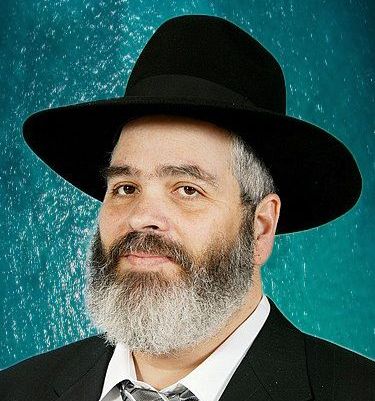
On his recent trip to France, HaRav Moshe Hillel Hirsch said:
We are celebrating in honor of the yeshiva in Aix-les-Bains. Eighty years ago the gaon HaRav Chaim Chaikin zt"l founded this yeshiva to spread Torah and yir'oh in France. With siyata deShmaya he was very successful, and his yeshiva produced roshei yeshiva, rabbonim and baalei batim who were deeply connected to Torah and avodas Hashem. This had a tremendous effect of the entire community to value Torah and those who learn Torah.
When HaKodosh Boruch Hu heard Klal Yisroel say, Naase venishma He said right away that they should build a Mishkan, "They shall make Me a Mishkan and I will dwell among them." We must understand the link between Naase venishma and building the Mishkan.
For example, you have a sick patient and a doctor.
Although the former chief legal officer of the Israeli Defense Forces admitted in her letter of resignation that she had lied to the High Court, among other things, some have already hastened to her defense, arguing that she is an Israeli patriot who should be dealt with through sympathy and dignity. One prominent voice is that of a group called, "Forum of 555 Patriots" that includes some 1700 pilots, both active and retired.
This group, founded well before the recent war, was one of those who encouraged reservists to declare that they will not serve during the period when judicial reform was under consideration. In an official statement, they said, "More than 1,000 pilots believe that the legislative path underway will lead to the cessation of volunteering on the part of pilots and other reservists. We call upon the legislators to halt this destructive legislation before it will be too late. Continuation may bring serious harm to the IDF and to the security of the State."
According to documents recovered during the fighting from the cellars of Hamas, one of the reasons that Hamas decided to attack was its belief that the Israeli army is falling apart, due to this and other such statements.
On erev Shabbos kodesh Parshas Chayei Sara, the twenty-second of Cheshvan 5687 (1926), the third Admor of the Belzer dynasty, R' Yissochor Ber, zatzal, passed away. His oldest son, the Admor R' Aharon of Belz, carried on his tradition and individual way. We present here a selection of stories depicting the continuity of this special Chassidic court, the esteem and relationship shared by father and son, the outlook of Belz and the personal path of its leaders.
Belz was a concept; it was a hallmark. When the English crown prince visited Poland, he expressed a strong desire to visit Belz. The fame of Belz — of all places — had reached as far as Great Britain.
What was the secret of Belz? What was so unique about it?
Belz strove for perfection. Inner perfection and self-fulfillment. Self-improvement epitomized. How symbolic was its famous beis knesses, a fortress of a building, massive and mighty, a magnificent edifice of strength. How characteristic were the yoshvim, the regular scholars (kollelniks) who made it their spiritual, if not real, home.
This Google Custom Search looks only in this website.
Outstanding Articles From Our Archives
IN-DEPTH FEATURES
In the years before the Second World War, dozens of great chassidic dynasties flourished in Europe. Each dynasty established its own beis hamedrash and chassidic court to which chassidim would flock en masse to see their Rebbe and to unload their problems and sorrows.
With the outbreak of the war, all these once famous and glorious courts were destroyed and the sounds of Torah and tefilla that used to emanate from their walls, were to be heard no more. The few Rebbes who survived, re-established themselves in Eretz Yisroel and America, far away from the blood-soaked continent of Europe.
One solitary dynasty however, remained in Europe -- the Pshevorsker dynasty which was headed by Reb Yitzchok Gvirzman who was fondly known to all as `Reb Itzikel.'
His Task in the World
Reb Itzikel opened his beis hamedrash in Mercatorstraat, Antwerp, and in a short time he became a magnet for the many downtrodden Yidden scattered across Europe who had lost all and everything during the war.
When Reb Itzikel was asked why he did not attempt to found yeshivos or other mosdos, he answered, "Everyone comes down to this world for a different purpose. Some tzaddikim are sent to improve the ruchniyus, others are sent for gashmiyus. My job is to see to gashmiyus."
Reb Itzikel remained true to his word and due to his advice and his brochos, many people were helped to set up new homes and to marry off their children in a befitting way. Many are the stories told of the miracles that people witnessed as a direct result of the Rebbe's brochos.
Opinion & Comment
The heart is deceitful above all things, and it is exceedingly sick -- who can know it? I, Hashem, examine the heart and search the kidneys, to give every man according to his ways according to the fruit of his doings (Yirmiyohu 17:9- 10).
Man is composed of major and subordinate powers. Some fill only a secondary function during his life, while others are more decisive and serve him constantly. Above these are powers that form man's very essence and are the primary forces in his actions and thoughts. These principal powers mold his personality and model his image and appearance.
One of these main forces is desire.
The Sha'arei Teshuvah of Rabbeinu Yonah writes most clearly that, "Desire is situated in man's heart and is the root of all his doings." Acts sprout from this root -- from desire. The body operates only as a servant who carries out commands and missions laid upon it by a supreme, absolute power. Desire, with its many assistants, rules over man.
This is man's actual condition. There is no mortal in the whole world who is born with a pure and clean heart, void of desire. This is man: already at birth, as he stirs from his mother's womb, this key power binds itself to him and it accompanies him until death.
There is only one counterbalance against this destructive power: constant abstinence from physical lusts.
Now we are approaching the primary deficiency of educational systems in general, and of the Israeli one in particular. This cardinal failing, found exclusively in those systems not built entirely upon the foundations of Torah, in the end spells ruin for these systems.
We can explain it as follows: our Holy Torah, a Toras Chaim, paints desire as a destructive power that causes results approaching complete havoc. In education and in general, the Torah concerns itself primarily with subduing this power and turning it into Hashem's servant and that of man's intelligence. Our Holy Torah sees the reformation of this power as our prime objective and only through control of it does man have his basic guarantee that enables him to choose good.
Rabbeinu Yonah continues,
|
|||||


.jpg)