| |
NEWS
This
Google Custom Search looks only in this website.
HaRav Shlomo Kanievsky shlita Talks about Tefillah on Yomim Noraim
"The following story was related by a tzaddik from a previous generation who found it necessary to travel to a distant city in the month of Elul to participate in a joyous family occasion." These are the opening words of HaRav Shlomo Kanievsky. He continues:
At first he was reluctant to go but family members pressured him to attend the simcha, and he finally agreed. En route, he saw a young goy beating an elderly man. He stopped and asked him why he was thrashing the poor man and received this answer. "It is harvest time now. Our work supports us for the entire year. I am striking this man, my father, who refuses to go out and work since if we do not harvest the crop, we will suffer hunger for the rest of the year."
We are called upon to integrate the important message from the above parable and internalize it into our lives:
It is not always easy to stand on Rosh Hashonoh or Yom Kippur in prayer for long hours. Sometimes we even feel that it is too much, too difficult a task. ...
Antisemitism is Eternal
It is a battle with almost a foregone conclusion of failure. Antisemitism is ingrained in the blood of millions throughout the world. Perhaps 'millions' diminishes the phenomenon because the actual figure is larger, much larger. From the time that hatred of Jews descended to the world when the Torah was given at Sinai, this hatred has not ceased for even a moment. This is what HaRav Yeruchom, Mashgiach of Mir, noted in the past. And he offered an example:
"Upon taking a walk one time, i encountered a gentile urchin playing with a whip. As i passed by, he lifted it and sent it lashing on my back. I couldn't help but thinking: Just a few moments before, several non-Jews also passed by but it didn't even enter his mind to wield the whip on them. What, then, did he see in me to do such a thing? Whoever taught him that it was alright to whip a Jew?
"The explanation is simple enough: Who taught a cat to pursue mice? Did it have to undergo any 'course' on how to chase mice? Of course not; it is built in, an inborn part of his nature. He inherited his antipathy in his genes. The same applies to gentiles. It is an integral part of their being. Fire and water are opposites, self-exclusive, and will never be peaceful with one another."
There were some who actually believed that once the mask was whipped off the face of the disgusting creatures of Gaza in the dastardly massacre which they perpetrated on that dreaded day three years ago, that the world will recognize with whom we have to deal with in that region of the land. But this was a mere illusion.
Even before the corpses of the dead Jews were gathered, the world became privy to the Gaza Nazi propaganda which hurled the accusation of genocide at us before the ground had even absorbed the Jewish blood which had been shed. This hatred is so unnatural, illogical and unrealistic, that a thousand most sophisticated rebuttals would not make a dent in the world opinion.
...
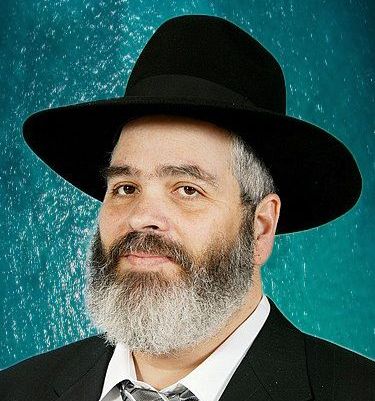
The Jews Called Him King: R' Dovid Oppenheim
Part 3
This was originally published in 5636.
In the first two parts we learned about the life of HaRav Dovid Oppenheim. This part is about his magnificent library, very large for its day.
The Famous Library
It seems as if nearly every printed sefer in existence could be found R' Dovid Oppenheim's library. Amassing so vast a collection demanded much effort on R' Dovid's part. This project spanned a period of fifty years, during which he spared neither time nor money in order to acquire every sefer available to him. Where seforim were concerned, money was no object to him. Whether at a fair, or on journeys for the needs of the klal, he searched for seforim and manuscripts to enrich his library, recruiting his relatives and paid agents for this purpose too.
These agents were sent to seforim owners who were selling their books. With their satchels of money in their hands, they paid whatever price the owner of the books demanded.
An example of this practice is found in a letter he wrote to R' Meir Katznelbogen, author of Ner LaMaor: "Regarding the seforim which are listed, I spoke with the aluf, R'P, who agreed to sell kvod Toraso all of them together.... and if maalas kvod Toraso wishes, he will give them to him for forty reinisch."
...
Explaining Hillel's Words at the Simchas Beis Hashoeva
"Whoever did not see the Simchas Beis Hashoeva never saw joy in his entire life....pious men and men of deeds would dance before them with fiery torches in their hands" (Succa 51).
"Tannu Rabbonon: Some of them would say, "Happy was our youth that has not shamed our old age"—These were the pious men and men of deeds...Tanya: They said of Hillel HaZaken that when he was rejoicing at the Simchas Beis Hashoeva he used to say, "If I am here—everything is here! And if I'm not here—then who is here?"
"He would say, "My feet carry me to where I love. If you visit my house, I will come to your house but if you don't come to my house—I won't come to your house, as it says (Shemos 19) "In every place.." (Succa 53a)
Hillel always serves as the model of humility, as we see in a number of places in the gemora, for example: "A person should always be humble like Hillel, and not severe like Shammai." (Shabbos 30:) "It was Hillel's humility which drew us under Hashem's protection." (Shabbos 31).
The quotation from Hillel, "If I am here, everything is here," which he would say at the Simchas Beis Hashoeva seems especially strange in view of Hillel's humility and patience. We present here eight explanations of Hillel's words collected from the sifrei acharonim. At this time we will present only four.
Where Ruchniyus Is Concerned—Don't Leave It Up To Others!
Rav Tzvi Markovitch, rosh yeshiva of Karlin and member of the Moetzes Gedolei HaTorah of Degel HaTorah, explains using the following moshol. The mispallelim of a certain shul, who were not men of means, were envious of their well-to-do brethren at another shul nearby who were able to provide all their members with whiskey to drink on Simchas Torah between the hakofos. As a result, the joyous atmosphere in the well-to-do shul was literally out of this world.
...

Search
This Google Custom Search looks only in this website.
* * *

* * *
|