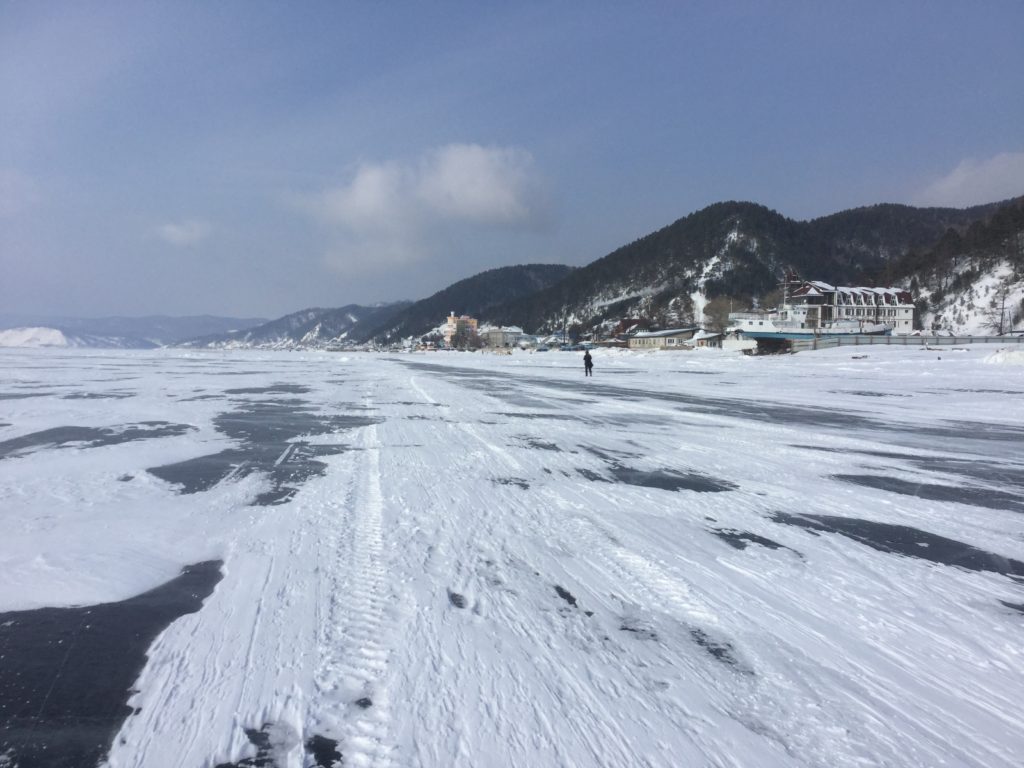
Bialystock Yeshiva today
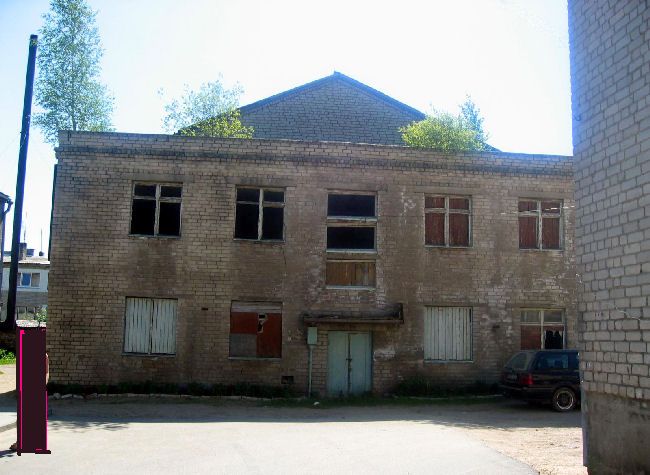
A Day in Novardok (Bialystock)
"...which I jotted down while I was privileged to attend [yeshiva] together with my worthy colleagues, who also aspired for purity of soul and immaculateness of spirit in Bialystock. This golden period of glory still continues to shed its radiance upon me; this was the time when I shared the proximity of those who thirsted for the divine vision..." (Chinuch Ve'idun HaHergeishim).
A description of a typical day in Novardok is offered up by R' Chaim himself. This is a compilation excerpted from his notebook of resolutions and was drawn up by the writer as a brief harvest, presented in chronological order. This is a powerful testimonial of the driving bikush and soul's yearning which existed in the Novardok framework—and which is no more.
* If you, the thirsty, are seeking the truth which mussar has to offer and wish to acquire true yir'a, try to train your soul to think and make an accounting for all your daily activities... Be very punctilious about your movements and gestures. Limit and restrain them; do not allow them freedom of random motion. Teach your limbs to obey and be docilely restrained.
* When you retire at night, think about controlling your speech, since this enables one to concentrate one's thoughts. This time of day is the most conducive for reflection and self purification.
* [In praying] go to your designated place at once, face the wall, shut your eyes and open up your heart's wellsprings and pour out your emotions on high and prostrate yourself before Him... Banish all lassitude, indifference and lack of emotion which prevent you from drawing near to the Shechina.
...One should seek to yearn for the Shechina and should thank Hashem with all his heart for having been granted life. He should express his exuberance and joy for having merited the bliss which enables him to awaken from his sleep and thank Him... and that he is given permission to prostrate himself and express his raw longing...
* One should accept upon oneself some spiritual mission or project which will preoccupy him throughout the day, peppered by the spice of his emotions which motivate and give expressions to that mission.
* After prayers, he should pace the floor and recapture in his memory the gems of emotion and insights which occurred to him during prayers. He should gather these up, distill them and present them to others and record them in a personal notebook for lasting testimony in his treasury of thought.
* Before leaving the beis medrash, you should step back from the doorway and stand in some hidden corner, your face to the wall, in deep concentration for five minutes... You should greatly cherish these moments that precede your leave taking of the beis medrash.
* During meals, one should pause, stop eating and sit contemplating the kindness of Hashem. He should later record all of his day's activities and write down any special emotions or thoughts which occurred to him that day.
* He should then prepare himself to thank Hashem Who sated his soul with food and drink. He should tune up and warm his heart with fervor and outpouring of the soul as he recites bircas hamozone.
* He should then direct his heart to the fountains of secluded meditation somewhere alone, and examine all of his deeds and conduct in the crucible of mussar.
* After he has filled his heart with all kinds of mussar, he should study a chapter of Chumash with Midrash, Rashi, Ramban, Ibn Ezra, Sforno, Ralbag and Sefer Hachinuch. He should seal every single word into his heart with profound endearment... And by virtue of his delving into the giants of the mussar spirit, he will be awed and deeply influenced, and will glow with the radiance of holy spirit and knowledge... He should hone his sense of introspection to continually examine, twice and thrice, what mussar demands of him.
* He should withdraw from all urban society once a month and run off to some secluded spot... The purpose of this isolation is to strive for exaltation of thought and to taste the flavor of reclusion and of the essence of his uniqueness.
* While he is in retirement, he should inject love for Hashem into his heart. And as his heart meditates, he should try to draw the heavenly spheres closer to him and review all the previous generations which illuminated the world. He should yearn to understand their greatness, glory and stature... And on that day of reclusion, he should sit all day in tallis and tefillin and sanctify himself and draw up resolutions which he will implement during the coming month to ensure that the taste of this pleasantness of eternity not leave him.
* He should rise every Friday morning early to study mussar and to pray according to the mussar way, with great devotion, emotion and fervor, and to temper his emotions with the refining process of intellect... Then he should go and immerse himself in honor of Shabbos and purify himself by delving into the weekly portion in depth with all the rishonim commentaries.
* This hour is very conducive for an internal scan of all the experiences and thoughts which occurred to him and which he innovated during that week... He should prepare body and soul for receiving the sanctity of the Shabbos... He should pray mincha and then try to capture whatever he can of the rose- fragrance of Shabbos that can last him for the coming week. He should conduct himself with withdrawal and remoteness until the tenth hour of the night. Then he should recite Kiddush and continue his meal in the mussar way, with awe and serenity, until he verily feels himself a holy vessel receiving the bounty of Shabbos into his being... He should awaken early to study some topic in Tractate Shabbos and then stand and pray with sweetness and patience together with his special group of colleagues-in-mussar.
* He should thus fortify and sustain himself with sublime emotions until mincha time. Afterwards, he should meditate for an hour in a secluded room, for this particular time is very conducive for self examination, and concentrate his thoughts with yearning and longing until it is time for Havdoloh.
* He should then immerse his soul in the clean waters of knowledge and the radiance of the holy lights which he enjoyed these past two days of Friday and Shabbos.
* He should rise at midnight once a month together with his peer group to study mussar with pleasantly charged emotion. Then each one should retire to his corner to pray for heavenly assist for one of the members of the group that they not stumble in any thing and not be disturbed in their avodas Hashem and striving for spiritual ascendence.
* One should exert oneself exceedingly to inject joy into his heart especially during times of hardship and disappointment... for the slings of shame and strife are like purifying soap.
* When he feels that his mussar thoughts are beginning to develop and take shape and that something noble and exalted is taking form in his mind, he should not interrupt this train with any form of speech... For who knows how much creativity of thought is lost forever because the thinkers were not careful and let them abort before they took firm shape.

Whose are the Seals?
"When times are good, a person should recall harsh times of poverty and suffering, when he was in bondage. One should never forget that it is Hashem Who released him from those straits and brought upon these good times, but be constantly aware of His goodness and should, therefore, fear Him and serve Him as a servant his master." (Ramban, Vo'eschanan)
It is human nature for a person never to forget those experiences and events which he experienced in his youth, for these become an integral part of his soul, a precious treasure which he wreaths with laurels of nostalgia, even those happenings may very well have included suffering, poverty and lowliness and been coupled with physical and mental anguish. These events may stand in total contrast to his present position of ease and comfort; nevertheless, they are dear and cherished in his memory and he will return time and again to draw them up and relive them with pleasure.
Woe to the person who has reached such a state of material luxury that he no longer remembers the former vicissitudes, struggles and conflicts he encountered in his youth. These experiences of youth are really a beautiful treasure, a gift in the sense of "to cause you to suffer in order to teach you wisdom." Any attempt for a person to obliterate or distort these events indicates a sorry moral descent, a grossification of spirit which is alien to those who seek to fear and love Hashem.
The very purpose of biographies of great Jewish figures is to create a model, an example to be esteemed and emulated. All of the trials and adventures of the heroes of spirit and `men of war' serve as a mirror for the younger generation to reflect upon. They see, read and internalize the message of those great people's experiences, and apply the lessons to their own lives in perfecting their own flaws. They apply those selfsame tactics and approaches in the battle of their own conflicts of life.
*
What can I say, a mere humble servant, with regard to myself? Is there any greater miracle than my own survival? I was persecuted, catapulted from one trouble to another, oppressed by the regime of evil which claimed to be progressive, the kingdom of Edom, that is, the Red Rule of Communism which burdened me with all kinds of horrible, tortuous labor, by day and by night without cease, amidst curses and debasement, naked and barefoot, in the hinterlands where no human set foot, in places of freezing cold which freezes the body and demoralizes the spirit.
Having survived this hell, I was revived with resuscitating dew in order that I might concentrate my talents and efforts to glorify, embellish and beautify through my thoughts and ideas which are the products of my early experiences.
The very trials which Hashem sets in our path are a direct expression of His love and concern for us. A nisoyon is a marvelous tool which can quarry precious stones from deep inside the mines of our dormant hearts. Were it not for the test which shakes us out of our lethargy and throws us into the whirlpool of introspection and thought, into a rising spiral of intensifying action in which our souls are purified and polished to gleaming brightness — we would still be ignorant of such vistas and possibilities and would be deprived of the glory to which they lead us, for these are denied to people living in complacent oblivion.
This should not be surprising. Even we can readily see that the lights will only go on if we flick a switch, and thus, in the spiritual sense, one must also apply some pressure upon the soul for it to release its hidden stores of light latent therein from time immemorial.
Just as raw matter must be given form and shape, and must be designed and molded, so with latent light. In order for its potential to be released, the soul must knead, mold and work the clay of this spiritual matter until it takes shape and is revealed in its full glory and majesty.
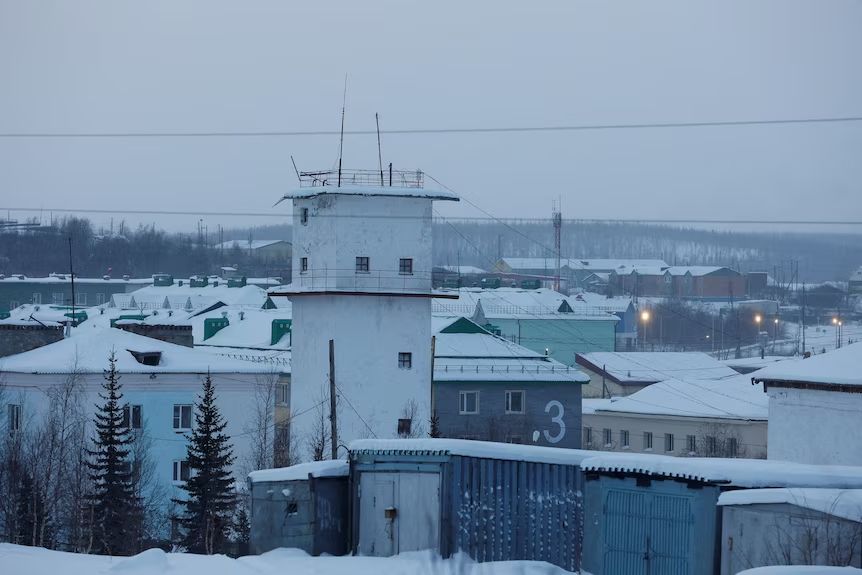
Remote Siberian Outpost
Four Must Give Thanksgiving
Chazal urged and obligated us to offer up thanksgiving for four situations in the human experience: illness, ocean travel, suffering and desert crossing. We suffered all of these in duplicate and triplicate. Let me illustrate:
In the summer of 1942, we worked at forced labor for eighteen hours a day at a stretch, without surcease, lugging lead and iron to munitions factories and loading up large buses. As we were crossing a bridge, one time, it suddenly collapsed under our weight, sending us crashing into the river below. Hashem gave me the impulse to jump for the shore and I was thus spared a terrible fate. All of the inmates at camp gathered to one side and even the frivolous ones joined in a communal bircas hagomel.
We had our encounter with the `desert' situation [wilderness] as well. In Elul of 1941 we were charged to chop down trees when one huge branch crashed down on my head, almost finishing me off. I was taken to the hospital some ten miles away, bleeding profusely all the while. The doctors performed emergency surgery and when I emerged, they said that the blow had lodged only one centimeter away from my brain.
While this covers the category of illness, too, I had another brush with near death. As a draftee in the Russian army, we were fleeing the German army when I contracted pneumonia. I could hardly breathe. To continue on would have been sheer suicide but, suddenly, orders were given for the army to encamp. We remained in the field and I lay there basking in the hot sun which served as the best treatment I could have hoped for in those times of fire, smoke and danger. And I was cured.
End of Part 3