Part IV
This was originally published in 1993.
For Part III of this series click here.
Part IV
A Discerning Heart
His powers of discernment made him one of the first rabbonim to detect the newly discovered Yerushalmi on Seder Kodshim as a forgery.
A visitor arrived one day in Galante, bearing a work containing his own chidushim on maseches Gittin as well as the "original" manuscript of the long lost Yerushalmi. The visitor displayed the four haskomos he had already received for the new Yerushalmi and he requested that Mahary'tz add his letter of approbation to the others.
At first, Mahary'tz merely evaded the man's request that he join the group which supported his claim to the manuscript's authenticity. Although the supplicant continued to visit him in the ensuing days, Mahary'tz refused his repeated entreaties.
Soon, the members of Mahary'tz's household began to notice something strange. Every time the man left the house, Mahary'tz would close himself away in his room. Eventually, the day came when the Mahary'tz could contain himself no longer and he announced to the visitor, "Your Yerushalmi is a forgery!"
"But I already have haskomos!" the man protested. "I have invested a lot of money in acquiring the manuscripts and now, because of a mere suspicion—which none of the other rabbonim agree with—does the Rav mean to withhold his haskomo?"
Mahary'tz thought for a moment then replied, "If you already have the audacity to challenge me like that, I'll tell you something else too. Your work on Maseches Gittin is composed of pieces of Torah which you have stolen from various places, such as little-known seforim. Although you have tried to rearrange their order and the original style, the thoughts are not your own.
"I realized this while you were discussing "your" chidushim with me. Without realizing it, you repeated things to me then in their original form, as they appeared in the seforim you took them from. Your mouth gave you away; all you did was change the order of things!"
This encounter took place at the beginning of HaRav Dushinsky's career in Galante. The forger was amazed at the young rav's erudition; not only was he familiar with the contents of a number of rare seforim, he even knew the precise language that had been used. In reply to the Rav's accusations, the forger mumbled something about coming again the next day with new proofs which would attest to the manuscripts veracity.
As soon as he had left the house though, Mahary'tz smiled and said to the talmid who was with him, "He won't be back anymore—you'll find him now at the railway station, running away on the first train he can catch." The talmid went to the station to check and returned in amazement, bearing full confirmation of his teacher's prediction.
Mahary'tz then explained why he had shut himself up in the room every time after the man's departure. "I closed the door so that I could change garments and shake his breath out of the old ones because I felt that vapor from his lips had gone into my clothes."
He went on to say that despite his being convinced of the man's deceit, he did not wish to publicize his views yet.
"What can I do?" he asked, "My colleagues have given him their haskomos and people will ask how a young rav can question what older rabbonim have testified to. This job is not for me to finish; I am sure that things will yet become clear."
HaRav Dushinsky then told his pupil that it had not been due to his general fluency in seforim that he had spotted the man's deceit with regard to the work on Gittin. "It was thanks to special Divine assistance, so that I would not stumble by giving a haskomo to somebody unworthy. During the very weeks which preceded his arrival, through some amazing circumstances, I happened to come across some of the seforim from which he took chidushim. That was how I noticed his trickery."
This story had a sequel when, many years later, after the controversy over the Yerushalmi had erupted and run its course, Mahary'tz met the forger again, at a spa in Germany. The man (who referred to himself as the Yerushalmi's "publisher," while Mahary'tz corrected him and called him the Yerushalmi's "author") was evasive and defended himself by complaining, "The truth was that I was sure of the manuscript's authenticity. I paid the full price for it and I hoped to publish it and earn some money. Now I am left with most of the copies and it seems that I have been swindled."
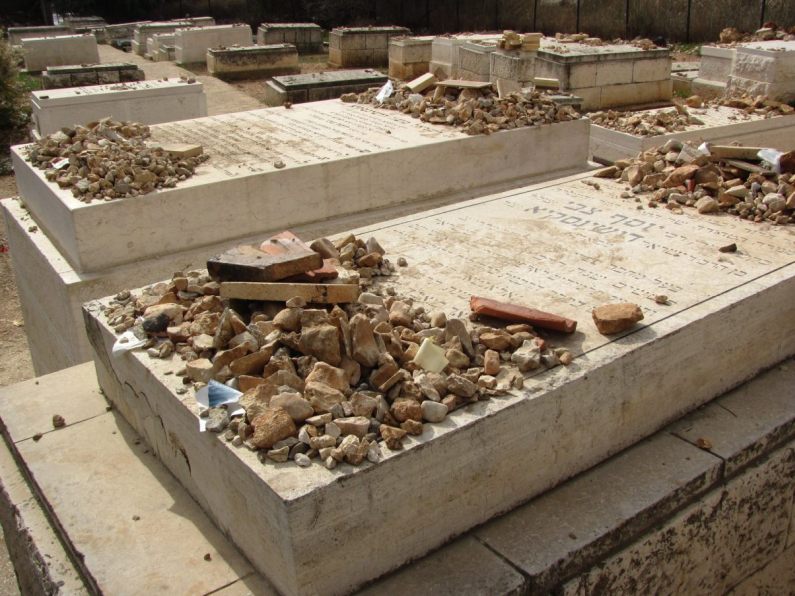
Graves of the Dushinsky Rebbes
A Sharp Rebuke, An Everlasting Bond
As we have seen, HaRav Dushinsky could be harsh with his talmidim when he deemed it necessary. A talmid was once caught reading a newspaper—a pastime that was strongly outlawed in the Hungarian yeshivos of those times. Mahary'tz called him in and rebuked him sharply. The bochur defended himself by arguing that he had his father's permission to do so. Mahary'tz's reaction to this came swiftly: "I was under the impression that you were in our beis hamedrash; if however, you feel as though you are in your father's house, you are free to go back there!"
The bochur involved was one of the best in the yeshiva and he begged his rebbe to reconsider. HaRav Dushinsky would not be moved. "Such behavior is a dangerous breach in the yeshiva's spiritual fortification," was his verdict. "Go home!" he commanded the talmid.
Only after the bochur returned at the beginning of the following semester bearing a letter from his father which stated that he gave Mahary'tz Dushinsky full authority over his son was the Rosh Yeshiva agreeable that the bochur should resume his studies in the yeshiva.
When he received reports that another talmid had been reading newspapers and journals, Mahary'tz gently pointed out to him, "I would rather not believe what I have been told about you... you know that I am opposed to students in the yeshiva reading newspapers..." The talmid apologized, acknowledging that he had in fact been reading but had been unaware that he was doing anything wrong. He promised that there would be no repetition and Mahary'tz pardoned him.
After this incident, Mahary'tz commented that during that period, he had even refrained from reading newspaper clippings which others had brought to him, neither glancing at them casually, nor reading them at times when it was impossible to be learning Torah. All this was despite the fact that as rav it was necessary that he keep abreast of certain events and the clippings used to be especially prepared for him by members of his community.
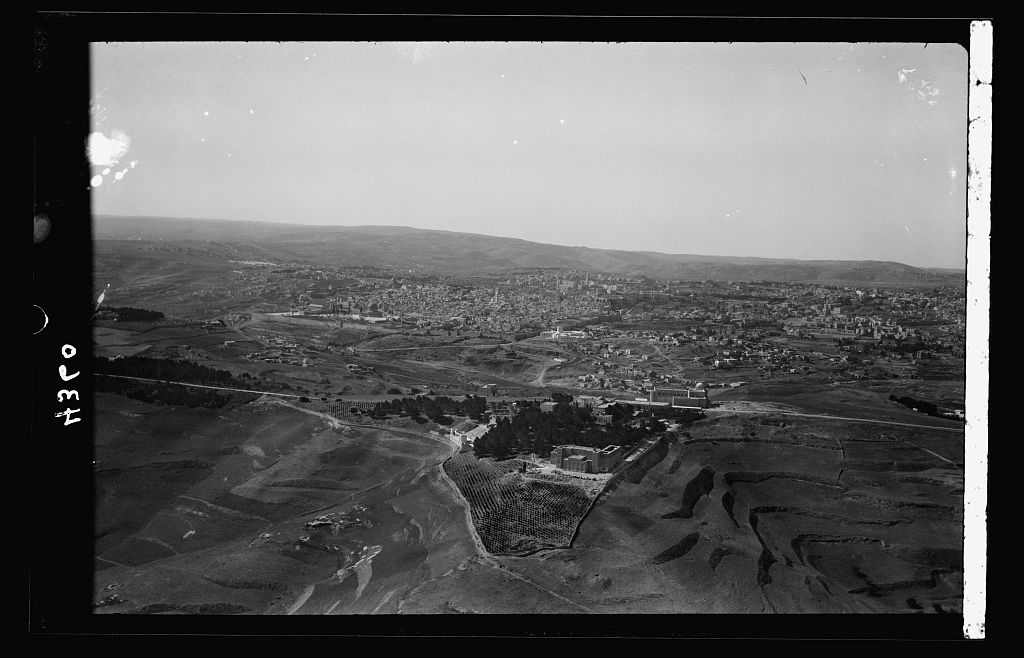
Jerusalem in 1931
While there was therefore hardly any comparison between his own reading of newspapers and that of his pupils, he nevertheless explained that while he was reprimanding others, he wanted to be sure that he himself was clear of the slightest trace of involvement in the outlawed activity, in keeping with chazal's admonition to, "Bedeck yourself and then bedeck others!"
Despite the stern facade which Mahary'tz showed his pupils, the friendships he formed with them lasted throughout their lives. Even after they had married and set up their own homes, they would travel long distances to visit him whenever they could. They derived guidance from his every move; many of his pupils would tremble every time they mentioned his name. They knew very well that he cared for them deeply and that his strictness had been for their own benefit, to mold their characters and to fortify them spiritually.
On HaRav Dushinsky's side too, the connection to the talmidim remained firm for years and years after they had left the yeshiva. If he heard that one of them was sick or beset by troubles, he would tearfully mention him in his tefillos.
The greatest proof of the mutual devotion that existed between the rebbe and his talmidim was something from which HaRav Dushinsky used to draw encouragement in his later years. "In the fifty years that I have spent disseminating Torah," he would say, "not one of my pupils has left the Torah's path, even after he left the yeshiva."
During the First World War, when thousands of soldiers were being decimated in the trenches and on the battlefields, there were several of Mahary'tz's pupils who were serving on the fronts. Once, the gaon HaRav Yosef Naftali Stern zt'l, a talmid, came across Mahary'tz pacing up and down in his room in great distress, with worry and deep anguish etched on his face.
"You should know," he explained, "that the Creator implanted in a man's heart a natural love towards his offspring. Hashem has not merited me with children (at that time, Mahary'tz was still childless) and I feel that my talmidim are my children—that they have grown up in my home. I love them deeply and now that they have been sent off to the front, I am beside myself with worry. Whenever I speak of them, I think about them."
Despite his having led two important Hungarian communities and having stood at the head of the embattled old yishuv, navigating its course during a stormy decade and a half, our portrayal of Mahary'tz Dushinsky as primarily an educator is perhaps the most accurate one. To get the impression that he was a teacher rather than a leader however, is to miss the point—and misunderstand the man—entirely.
He was a rare example of the old type of rav that in our times has all but disappeared, who stands at the head of both his community and his yeshiva. His qualities of leadership and of teaching complemented and enhanced each other. Mahary'tz maintained that Hashem grants a rebbe special powers of discernment so that he can guide his pupils along the correct path. In the same way, for the sake of the community, Hashem assists a leader in his task, enabling him to guide his flock effectively and to chart the correct course during difficult times.
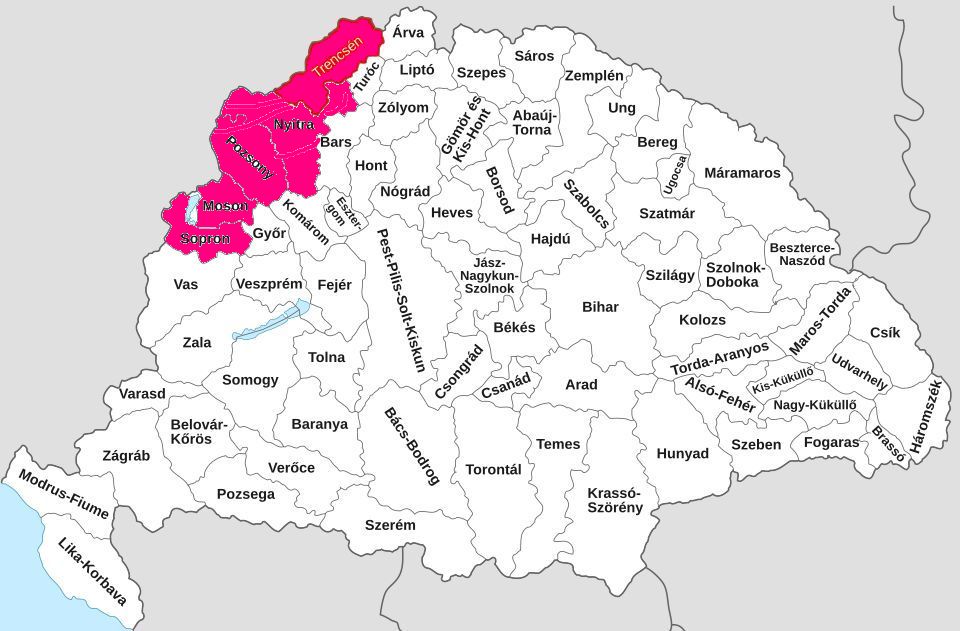
Oberland Hungary
His Legacy
Upon arriving in Yerushalayim, HaRav Dushinsky immediately opened his yeshiva and began spreading Torah. Many new talmidim flocked to learn from him. During his last years, the yeshiva took in groups of refugees from Europe, who found there a measure of comfort after their terrible experiences during the war years.
When Mahary'tz passed away on Erev Succos 5709, his son, HaRav Yisroel Moshe Dushinsky, a deputy Av Beis Din of the Eida HaChareidis was immediately appointed as Rosh Yeshiva. As soon as Rosh Chodesh Cheshvan, he began giving shiurim and testing the bochurim as his father had done.
As the yeshiva grew and developed over the years, several new educational institutions were opened in Yerushalayim and Bnei Brak which are affiliated with it. Together, these institutions form the "Union of Institutions of Mahary'tz Dushinsky in the Holy Land."
Today, Beis Yosef Tzvi is an educational complex comprising a talmud Torah, yeshiva ketana, kollelim and programs for training rabbonim and dayanim. Altogether, about one and a half thousand talmidim are part of the yeshiva. There are also yeshivos which are open in the evenings to cater for working men, funds from which prizes are awarded to exceptional students, elementary and high schools for girls and organizations for helping poor families and young couples.
According to the yearly calendar published by the "Union of Institutions," the cost of yearly upkeep of all the institutions is millions of dollars. The directors are faithful to the principle established by Mahary'tz not to take any money from the Government or local authorities, neither of Israel nor of any other country.
Contributions from gentiles and Shabbos desecraters, whether as individuals or public bodies are also unacceptable. Despite the tremendous burden which adherence to this tradition imposes on those who head the institutions, every penny is somehow raised—with the help of open miracles which make the collection of the monthly budget possible.
In the past, both the Steipler gaon zt'l and yblcht"a, Maran HaRav Shach have expressed their encouragement for the devotion of those who follow this ideal. They wrote, "We lend our support to the esteemed directors of the holy talmudei Torah, who until now have refrained from accepting any support from sources alien to the authentic Jewish spirit, according to the opinions of our teachers z'l. They continue to tread the path of traditional education that has passed from generation to generation—the holy path. May their hands be strengthened to provide counsel for their continuation along this path." (See Kareina De'igresa, letter 282)
The following survey of "The Union of Institutions of Mahary'tz Dushinsky is excerpted from their calendar more than thirty years ago.
The main yeshiva today
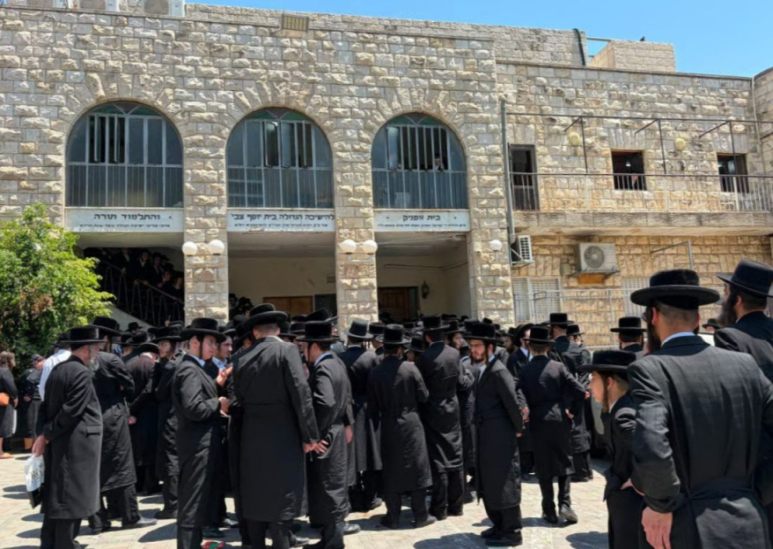
The Talmud Torah
On Rechov Strauss, in the heart of the chareidi area of Yerushalayim, inside a large courtyard, stands a tall, seven story building which houses one of the largest chadorim in the city: Talmud Torah Beis Yosef Tzvi. The school caters to the range of elementary school ages, from kindergarten until yeshiva ketana and it includes dorming facilities for older boys.
The Yeshiva Le'tzeirim And The Yeshiva Gedola
The yeshiva's main building is on Rechov Shmuel Hanovi. Here, the younger talmidim are prepared by a team of expert maggidei shiur for their future placement in the yeshiva gedola. That the yeshiva sees extraordinary success in readying its young charges for the years they will spend studying Torah in purity, is attested to by the very good name that the alumni have earned for the yeshiva.
In the yeshiva gedola, the method of study of the Chasam Sofer, which Mahary'tz followed in teaching his students, continues to be implemented by the staff who teach the hundreds of bochurim. A cadre of devoted mashgichim and maggidei shiur drawn from the best of the yeshiva's products are guided and coordinated by the Rosh Yeshiva, HaRav Yisroel Moshe Dushinsky zt"l (shlit"a).
The Kollelim
Kollel Tarbitz"a (the gemora in Menochos 82 explains this name to mean "a place where Torah is spread) is an old established kollel which was set up by Mahary'tz in 5707. A special branch of Kollel Tarbitz"a has opened in more recent years, whose members devote themselves to the study of Choshen Mishpat after having already completed Yore Deah. A number of them have already been awarded smicha of "yodin yodin" by the generation's leading poskim, who glowingly praised the expertise of the avreichim in this difficult section of Shulchan Oruch.
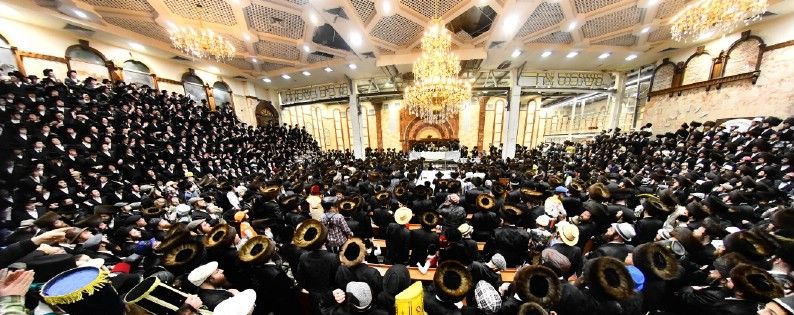
Purim
The Bnos Esther School
The school was founded in 5725, named after the tzaddekes Rebbetzin Esther Dushinsky a'h. The school was set up to provide girls with an authentic Jewish education in the traditional spirit with special emphasis on faith and modesty. When it opened, the school had one kindergarten class and it has grown to cater to twelve classes, containing four hundred and fifty pupils. Both parents and pupils are very happy with the education given by the choice team of teachers and the school continues to grow and thrive.
The Institutions in Bnei Brak
In the space of a few short years, a handful of devoted and energetic avreichim, alumni of the yeshiva gedola, have achieved incredible results in the field of education. With much siyata deShmayabeis hamedrash which caters men who work part time and learn part time. Two of the building's floors house a talmud Torah which has seen such success since it opened that the demand for places already exceeds the facilities.
The Charitable Institutions
Side by side with the Torah institutions, are the loan funds which have been set up to help ease the financial pressure on poorer families or the burden of making a simcha. Considerable sums are loaned out with repayment terms that are can be easily met. Special mention must be made of the Tzidkas Mahary'tz fund which helps students of the yeshiva when they marry and the Ish Lere'eyhu fund which provides help to parents marrying off children, helping them to bear the crushing burden of the expenses that must be incurred.
5787 Update
There are also institutions in Beit Shemesh (including Talmud Torah, yeshiva high school, and girls' schools) and Elad. In addition there are also affiliated Dushinsky community centers and institutions in Boro Park (Brooklyn, NY), Manchester, and London.