| | Feature
14th Tishrei 5787—Seventy-eighth Yahrtzeit — The Pedagogue: HaRav Yosef Tzvi Dushinsky zt'l
By Zeev Steiner
Part I
This was originally published in 1993.
For Part II of this series click here.
He was a master educator, instilling in his talmidim an approach to learning, while guiding and directing their study of mussar and their character development. He opened up new worlds for them, of depth and precision in their learning and in the heights he showed them they could reach. He demanded from them complete application and the correct use of their time in all aspects of life.
His talmidim were able to see that he demanded no less from himself than he did from them. They loved him intensely and felt the sacrifice he made for them, transmitting his very essence to them.
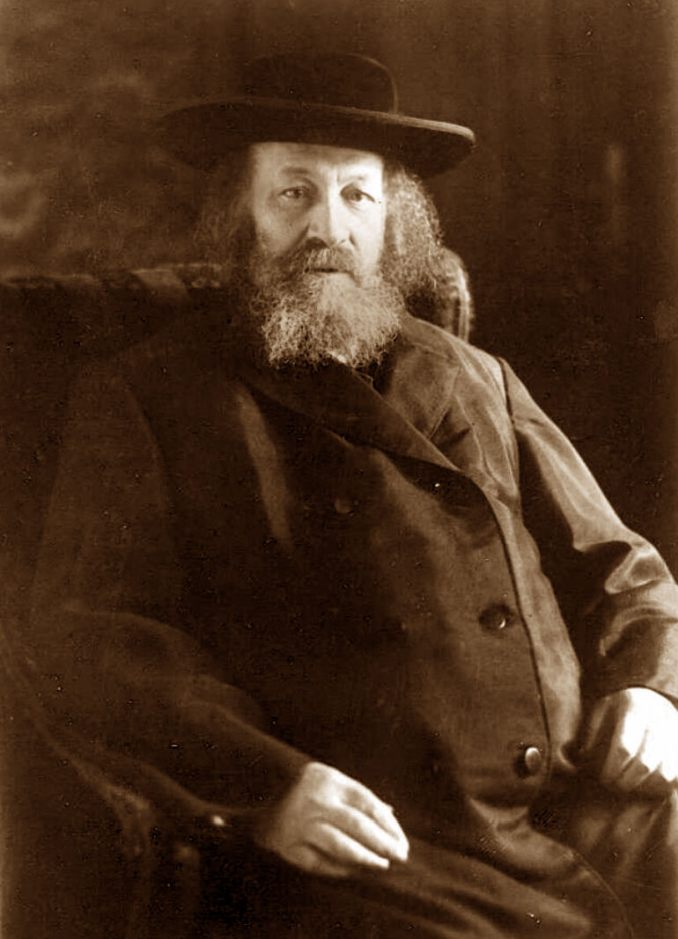
Maran HaGaon HaRav Yosef Tzvi Dushinsky zt'l, the Av Beis Din and Rosh Yeshiva of Galante and Choust and the Rav of Yerushalayim, leader of the old yishuv in Eretz Yisroel. A rosh yeshiva who refrained from discussing his own chidushim with other Torah scholars. He had no permission to do so, he would explain, for his chidushim were the property of his talmidim.
The Most Precious Chidush
"I have no right!"
The distinguished visitor was stunned. Passing through Galante on his journey, it had been a matter of course for him to pay a visit to the rav and rosh yeshiva, the Mahary"tz Dushinsky, whose praise had spread far and wide while he had still been a youth. He had been hoping to discuss some divrei Torah with the Rav but now he had been refused!
The Rav's answer had been definite. At first, the visitor had said over some of his own chidushim. The Rav listened intently but made no reaction. The visitor therefore decided to ask the Rav to say over some of his own recent chidushim but his request met with a full refusal.
"All my Torah belongs to my talmidim," Mahary"tz Dushinsky explained. "It is only in their merit that I have the divine assistance that is necessary to develop chidushim. I have therefore resolved to give them what is theirs and I have no right to glory before Rabbonim and geonim in Torah which rightfully belongs to others—Heaven did not give me these chidushim for that!"
HaRav Yosef Tzvi spoke quietly and clearly, as though what he had said was the most straightforward thing in the world. His visitor however, could not contain himself and cried out, "Yeshar co'ach for this chidush alone! For teaching me that honesty and faithfulness in business matters apply equally to chidushei Torah!"
Mahary"tz Dushinsky was devoted to his talmidim, heart and soul. He saw the dissemination of Torah and the raising of disciples as his life's work. Ordinarily, a rav who served as both a halachic authority and a rosh yeshiva would divide his time between communal affairs and the rendering of decisions, leaving aside a certain amount of time for his yeshiva. HaRav Dushinsky made it clear to his community however, that his order of preferences was different: spreading Torah was of supreme importance. Ruling in halacha and instructing the community took only second place to instructing his sons—his talmidim. For this end, he was willing to forgo his own personal advancement in learning and in halachic ruling in order to dedicate himself totally to his talmidim.
One of his pupils went so far as express it in the following terms. "He sacrificed the greatest halachic authority of the generation—who was needed at the time—on the alter of his yeshiva, for the sake of the well-being of his talmidim."
Not all of the thousands who approached him were even successful in obtaining a reply. A typical answer would be, "I am burdened with my holy work and I have no time."
In reply to a rav in Prague who sent him two letters, one after the other, dealing with a difficult question, he wrote, "I am caught up with the concerns of the talmidim who were examined this week and I was therefore unable to reply..."
When questions concerning his community were brought to him, his answers would contain just two or three words, as though he was formulating a telegram.
He was as economical with the time he allowed himself as he was with that which he allotted to others. His pupil, HaRav Yosef Naftali Stern, once asked him why he never set time aside for recording his chidushim. "Who knows whether or not I have arrived at the true meaning?" HaRav Dushinsky replied, "If, cholila, not I will be called to account for the precious time during which I could have learned and taught..."
The members of an important and well-known community once set their sights on appointing Mahary"tz Dushinsky as their rav. Being very eager to engage him and knowing the order of his priorities, they found a way to entice him. They told him that they were in a position to finance the upkeep of a yeshiva comfortably. He would also be able to enlarge the yeshiva and take in many more talmidim without any burden or worry whatsoever. When this rumor reached the yeshiva, it was greeted with great rejoicing. It seemed that at last a solution was at hand to the problem of the severe overcrowding in the yeshiva's hall.
An honorary delegation, composed of dozens of the community's dignitaries, wealthy men and lay leaders, arrived in Galante while the Mahary"tz was delivering his regular shiur in Tanach. Approaching the rav, the delegation's leader intoned in the accepted courteous manner, "Would the rav pardon us for taking up just one brief moment of the shiur?"
Mahary"tz Dushinsky raised his eyes from the sefer that lay before him and responded dryly, "You want to disturb us for a brief moment but we will not allow ourselves to be disturbed! (mir lozen zich nisht shteren!)
In the Old City

Torah Of Life
His shiurim then, were sacrosanct, come what may. When he was old and weakened by illness and pain, there were days when he could hardly eat. Nevertheless, the members of his household could not manage to dissuade him from saying the shiur. "I feel that the shiur is my life—I cannot give it up. During the shiur, I feel like a different person and when it ends, the pain attacks me again."
During the months of Tishrei and Nisan, when the yeshiva was in recess, he would complain of weakness and of feeling unwell. He would attribute this to the decrease in harbotzas Torah to his talmidim during these months.
Upon the marriage of his only brother, Rav Moshe Mordechai, the Mahary"tz attended the wedding, which was held in another town. His brother was stunned however, to see the Mahary"tz preparing to return home the day after the wedding. Rav Moshe Mordechai begged the Mahary"tz, who was there as his brother and teacher, as well as to honor his wife's family as mechuton, to stay on for the week of sheva brochos. HaRav Dushinsky was simply unable to fathom how his brother could ask such a thing of him.
"I absolutely cannot," he replied. "I instructed the bochurim to prepare for the shiur—and I even forbade them to go to the railway station to meet me—so that I should be able to begin today's shiur immediately, and you are asking me to miss the shiur for another day?"
In the Hungarian yeshivos at that time, it was customary for the learning to be divided into three "disciplines": an in depth shiur [iyun], a simple shiur [bekius] and a "sugya" shiur that dealt exhaustively with one of the topics in the gemora being studied. On many occasions, the Mahary"tz would combine all three, delivering them together. He could lecture for hours at a time. The amount of time he allotted to the delivery of the shiur astonished his contemporaries who wondered how it was that a communal rav and leader, surrounded by a thousand different queries and concerns, found the time and the strength to say any major shiurim, let alone such long ones. At times, he would speak for over six hours a day!
He would never give his shiur without preparing first, even if it was on a gemora he had already learned dozens of times and in which he was completely fluent. Then, before he tested the bochurim he would go over the gemora himself once again. His pupil, HaRav Shimon Eliezer Zusman Sofer, once entered the Mahary"tz' room to find him preparing for a shiur in...the weekly Chumash parsha! Noticing his pupil's wonderment, the Mahary"tz asked him, "What are you so surprised at? Am I greater than HaKodosh Boruch Hu, as it were, whom chazal say learned the Torah over before He gave it to Moshe Rabbenu?"
In his shiurim, he paid great attention to elucidating the simple meaning of the gemora and the language of the Rishonim. He would analyze the different opinions of the Rashba, the Ran, the Rambam and the Rosh, examining every word. He was very particular in laboring over every point which the Rishonim had discussed at length in order to discover the deeper meaning in their comments. In this way he would develop answers to the questions that had been posed by the Acharonim. Basing himself on this or that nuance in the language of a Rishon, he would many a time explain that this Rishon had an entirely different approach to the topic. When students presented him with difficulties or intricate chains of logic, he would simply point with his finger to a relevant phrase in Rashi, the Rosh or the Ran and they would suddenly see things from a new angle.
His talmidim said that occasionally, in the simple shiur, he would take up such a long time explaining what Rashi had written that they wondered why he found it necessary to speak at such length. Only when they began to learn the Tosafos did they realize that all the questions on Rashi vanished according to the interpretation of Rashi's explanation that their rebbe had taught them.
If there were additional ways to understand the sugya that could be gleaned form the classical commentaries, he would explain. Even when the Maharsha and the Maharsha"l differed slightly in their explanations of Tosafos, he would explain at length that each of them had a complete approach for understanding the entire sugya and it was this that had brought them to their differing explanations of the Tosafos.
Instead of skipping the passages of aggadah, he would explain them as fully as he explained the halacha, using the Maharsha's commentary. Not only would he elucidate the actual lesson contained in the aggadah, he would explain why it had been included in this particular masechta.
Nothing was casual. Everything was intricately planned and set out. There were no superfluous words in chazal's teachings and there was wisdom and depth to be found at every step. All that was needed to see it was meticulous study and a clear understanding. Such then, was the training in learning which HaRav Dushinsky gave his talmidim.
A Living Example
If his pupils were ever unable to understand something that Mahary"tz had explained, they could still learn volumes about love of Torah from the living example that their rebbe set them. When he found a solution to something in a Rishon that had been puzzling him, his eyes lit up and his face shone with joy and contentment. At such a time, his facial expression was a most eloquent demonstration of the sweetness of Torah. The intense concentration that was visible as he repeated a piece of Rashba by heart, was a lesson in application.
The prize which was the most valuable in his eyes was...chidushei Torah! The students who gave the best performances in his fortnightly tests were treated to a special reward: HaRav Dushinsky would repeat extra chidushim which had not been mentioned in the course of the regular shiurim, especially for them.
Even as a young bochur, he had been able to ignite the atmosphere with his own fiery enthusiasm for Torah. The gaon HaRav Tzvi Kinstlicher, rav of Hermandtstadt, used to tell the following story which illustrates this: "Towards the end of the summer of 5650 (1890), I decided to travel to Pressburg in order to serve our master the author of Shevet Sofer, zy"a. On the day I arrived, I sensed something unusual in the air. The talmidim were arguing with each other excitedly and discussing their learning with great enthusiasm. When I asked for an explanation, I was told, `There is a respected bochur in the yeshiva, a chasan, named Yosef Tzvi Dushinsky from Faksch. He left the yeshiva today because of his upcoming wedding. Before he parted from his friends, he delivered a wonderfully deep drosho on one of the sugyos and that drosho has become the talking point of all the best bochurim.'
"I never saw our master Mahary"tz Dushinsky in that yeshiva," HaRav Kinstlicher concluded, "but I heard the echoes of his drosho!"
During Pesach 5646, when he was almost nineteen years old, he fell ill with typhus. His doctors blamed his having contracted the deadly disease on the many fasts which he used to undertake. They expressed concern for his life. His weakened body was racked with pain, to the dismay of his parents and teachers. It was during this period that he wrote to his brother, "Alas, for the writings which I am missing, which acted like a restorative for me; as on the days when my spirits were crushed and bruised and it was only Hashem's Torah that supported and sustained me."
The only regrets he expresses here are over the Torah which he couldn't learn, not over the illness itself: "And I am more troubled by the many idle times I have had, during which I was unable to learn as I wanted to. I must write the truth; I am upset and my insides churn over the precious moments that have passed and I have been unable to learn Hashem's holy Torah...if only Hashem would remove every impediment preventing us from continually studying His Torah."
Meticulous accounting for time was another thing which Mahary"tz particularly impressed upon his talmidim. Here too, his own example was the best way to convey the importance of utilizing every moment. He would tell the pupils that he had acquired large portions of his knowledge by using spare moments here and there.
For example, while he was learning in the Pressburg Yeshiva, there had been a few minutes to wait each day before entering the dining-room for lunch. The yeshiva had hundreds of talmidim and since there was not enough room to serve the meal to all of them at once, there were several sittings. For most bochurim, the minutes spent waiting for the shifts to change were usually wasted, the prevalent feeling being that nothing could be achieved in such a short time anyway.
Mahary"tz however, arranged a special learning seder for this time. During those moments, he managed to learn through all of Nach. On its completion he went through the sefer Ha'akeida on Chumash, the Alshich and more. He went over and over these works until he was fluent in them. "Take this lesson to heart," he would tell his own pupils, "a few moments here and a few moments there, add up to a long time!"
Not only did he catch all the moments, he made the maximum use of them too. In a letter dated, "Yom Shishi leseder Chukas, 5643," [when he was sixteen] he wrote to his brother, "[All week,] until Friday afternoon, I don't even have time to swallow my spittle. All I keep in mind are the thoughts that come to me while I learn gemora and Tosafos. And believe me [when I say] that many a time I see a straight path ahead of me but I beat it out of my head, so as not to be sidetracked by it."
In conversation once with the gaon Rav Yechiel Weinberger, Av Beis Din of Seredhely, Mahary"tz revealed what his schedule had been as a young bochur. Rav Weinberger had become weak and fallen ill. "Take care of your health," HaRav Dushinsky admonished him, "ours is a weak generation, unlike the preceding ones. I remember when we were young, how we would learn until late at night and then rise early in the morning. When we went up stairs, we took them a few at a time—not because we were wild but because the time was so precious to us!"
Mahary"tz would tell his pupils, "When someone makes every effort to be careful with his time, he is helped from shomayim to achieve his aim—`One who comes to be purified, is helped.' I myself experienced this and you should learn from it. It happened when I was in the Pressburg Yeshiva.
"I very much wanted to hear the shiurim of our master the Shevet Sofer, zy"a but I always feared that participating in the shiur would lead me to wasting time. That was because one can never arrive exactly at the same moment as the rav and those few moments of waiting are notorious for being spent in idle talk. [Nevertheless,] I set my heart and soul on it—and I was helped from shomayim. Not once was I forced to take part in empty chatter while waiting. Whenever I decided to go up to the shiur, I would meet mori ve'rebbi on the stairs, on his way to the shiur! Thus, I never wasted a moment!"
In Bunihad
Between the ages of thirteen and eighteen, HaRav Dushinsky learned in the yeshiva of Bunihad. From his very first day there, he was known for his supreme application. While the heads of the yeshiva were the geonim HaRav Moshe Pollack zt'l, author of Vayedaber Moshe, and his father HaRav Zeikel Pollack, the yeshiva's spiritual dean, it was known that Reb Zeikel's wife, Rebbetzin Hendele, also played a role in making sure that the students were learning properly.
It was her custom to stand at the entrance of the yeshiva building holding a "bezen." When she noticed a latecomer to the seder, she would hit him with the implement she was holding while admonishing him about the purpose of his coming to the yeshiva. Some idea of the punctuality of Mahary"tz and his brother (and of Rebbetzin Hendele's efficiency) can be gained from Reb Zeikel's advice to the pupils: "Take a lesson from the Dushinsky brothers," he would tell them. "See how they learn constantly and keep the fixed times; they are the only ones who have never received "a helping" on their way in to the beis hamedrash!"
HaRav Dushinsky never wrote a will. To his family and pupils he explained that he just didn't have the time to formulate, arrange and write one out. They later said that this itself was a spiritual "will"—a lesson on the value of time.
End of Part 1
|