| | Feature
"Separate From That Community": The Founding of Hungary's Separate Jewish Communities
by Tzvi Ben Yaakov
Maharam Schick
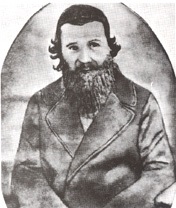
This was originally published in 1992.
"Distance yourselves from the tents of those evildoers, lest you become caught in their web of sin," cried Maharam Schick and the Ksav Sofer to the yirei Hashem. With that, Hungarian Jewry's great schism took effect — a schism which led to the establishment of many totally separate kehillos.
This ruling was issued as a result of the passage of new regulations of the Jewish community in 1869 (5629), giving control of the educational institutions of the Hungarian Jewish community to the reformers (see below).
The Maharam Schick did not issue the psak of his own accord. He made a point of stressing that he had received the directive not to associate or join hands with them from the Chasam Sofer, zt"l. That is why he ruled that they could not be relied on in matters of issur and heter, and could not be trusted to teach or educate Jewish children. Their shechita was treif. Anyone affiliated with them, could not serve as a witness in a beis din. They were to be regarded as non-Jews, whom the members of the chareidi community were forbidden to marry. Their children were possible mamzerim, who could not join the Jewish community through marriage, even if they repented!
Amendments of State
The Maharam Schick publicized these amendments on a massive basis, so that the vacillating amei ha'aretz would understand the severity of the matter, and disassociate from them. All understood that a schism that was not followed by the creation of new framework would not last. As a result, they regarded banding together against Torah's rebels, and uniting all yirei Hashem under one banner, as their foremost obligation.
As a result, on the third of Av, 5630 (1870), the representatives of the chareidi communities of Hungary, met in Pest, and laid the foundations of the separate Orthodox kehilla.
The Bad Angel Replied Amen
Although the government opposed the schism in the Jewish kehilla and the decisions of the Reform Congress were meant to include Jewry at large, local authorities were forced to approve the amendments of the Orthodox communities. The reason for this was a prior decision of the king that permitted members of the Jewish kehilla to form a new society called Chevra Shomrei HaDas. This decision was made before the issue of the Congress had come to the fore.
At first, only a few members of the kehilla joined the Chevra. However, when the chareidim left the Congress, nearly all Torah-Jewry joined the Chevra in an all-out effort to battle the porkei ol. Having no choice, the government resigned itself to the schism, and in 5631, approved the "Amendments of Incorporation" of the Orthodox community.
Later on, Hungary's minsters agreed that those who had really separated from the Jewish community, were the reformers (porkei ol), and that the true preservers of Israel's spark and spirit were the Orthodox. This approval helped establish the positive attitude of the authorities towards the demands of the chareidi community.
Ksav Sofer

Never Say Die
The neologues (an early name for the reformers) did not sit idly by, but constantly sought to besmirch the chareidim in the eyes of the ruling powers. However, the authorities understood that these complaints stemmed from the failure of the neologues to gain control over Jewry at large, and their complaints fell on deaf ears, due to the Orthodox community's watchfulness.
Among those to encourage such vigilance was Maharam Schick, who in one of his teshuvos, writes: "Whoever looks behind the scenes, knows that the members of the Congress have not yet despaired, and still look forward to the day when they will have the upper hand, and be able to carry out their wicked plans. They eagerly await the opportunity to execute their evil machinations. If the guardians of our faith slacken or slumber for even one moment, the neologues will seize the opportunity to covertly yet forcibly uproot Torah."
In Pressburg, the Ksav Sofer waged war against the porkei ol. He was joined by R' Hillel of Kolomeia and his son-in-law, R' Akiva Yosef Schlesinger. The Reformed Jews spoke out against the rabbonim in a libelous document called Ksav Yosher Ve'Emmes, which they distributed in the area. When these documents appeared in Sardahal, Mahri Assad banned them.
The Status-Quo Jews
Not everyone joined one of these two groups. Many wavered between the poles. Although such Jews were considered Torah observant, they refrained from entering the battle over the image of Jewry. In time, they formed a third group, referred to as "the compromisers" or the "status-quo Jews." They justified their position by averring that their intentions were lesheim shomayim, and spouted platitudes on the value of peace and unity. They claimed that by maintaining amicable relations with the neologues, they would eventually save many of them.
Maharam Schick strongly opposed this position, saying: "How do they not fear the words of Devorah the prophetess who cursed those who did not rally to Hashem's battle cry? As the Kuzari says, even though their intentions are good, their deeds are not pleasing."
Complex Questions
With the schism and the creation of separate kehillos, the actual battle had only begun. In over forty teshuvos, Maharam Schick deals with problems that arose on a daily basis, caused in particular by the violence of the neologues who dismantled mikvo'os (as their counterparts did in Germany), forcibly prevented people from immersing.
Some of the questions were: How should one deal with neologues who pretend to regret their deeds, only in order to further weaken the hands of the Orthodox? Should porkei ol who have died, be buried beside tzadikim?

Rabbi Shamshon Refoel Hirsch — Pioneer of Separation
The first schism in the Jewish community was initiated by R' Shamshon Refoel Hirsch, in Frankfort. It was he who spearheaded the battle for separate kehillos, a goal for which he forfeited his very well-being.
In order to follow the development of the schism, one must understand the makeup of the Jewish kehilla in those days. During that era, church and state were not separated. The state granted recognition only to one organization per religion.
When the reformers took power in the established Jewish organization, Jews were not forced to enter Reform temples and to listen to organ playing. Nevertheless, the law required the members of a particular faith continue to pay taxes to its officially recognized prayer-house, which for Judaism became the Reform temple. The Jews could not avoid that obligation.
In much of Germany, the Jewish kehilla was controlled by the Reform movement. A similar situation existed in many parts of Hungary. As a result, G-d fearing Jews had to support Reform ritual, while being deprived of their own rights. In addition, the Reform movement did everything in its power to prevent the chareidim from observing mitzvos, going so far as to close their mikvo'os.
R' Shamshon Refoel Hirsch, when he was called to take over leadership of the small group of faithful Jews left in Frankfort, attached top priority to the task of organizing a separate Orthodox kehilla. For that purpose, he established a synagogue and mikveh, and attended to all the affairs of the chareidi populace. While maintaining their own facilities, chareidi Jews continued to pay taxes to the Reform temple.
However, a wealthy Jew named Baron Shimon Wolf Wilhelm Rothschild lived in their midst, and he supported the chareidi community generously. The kehilla continued in this manner until 1870, a year after the schism in Hungary. Only then did it receive an official license, which recognized them as a separate kehilla, and absolved them from paying taxes to the Reform community, allowing them to pay the monies to their own community instead.
The first separate kehilla was established in Frankfort. However, Hungary was the first country to found separate kehillos on a massive, country-wide basis.
In Frankfort, the middle-of-the-road compromisers did not establish an additional kehilla. Instead, they preferred to remain within the Reform community as an Orthodox arm. From a religious standpoint, though, they were stronger than the "status-quo Jews" of Hungary.
For Now and Forever
So sharp a schism was not implemented in other countries because of the difficulty and responsibility involved. Maharam Schick himself did not hasten to take such a step, and hoped that others would precede him. In a letter to the Ksav Sofer, he wrote: "Why do our great sages remain silent and stand aside on the day of war, on the day that strangers are conquering the battalions of emunah and yirah?"
Today, all agree that the break is what saved Hungary's Jews from shmad (as Frankfort's Jews were saved by R' Shamshon Refoel Hirsch). Even the rabbis of the Orthodox branch who remained within the Reform camp admitted that the battle waged by the chareidim against the Reform, and their organized separation from the community, is what caused the Reform movement to surrender to all the demands of the chareidim regarding religion.
From an ideological point of view, the question of when to adopt the policy of Maharam Schick, as transmitted to him by his mentor, the Chasam Sofer, remains open even today, and becomes relevant each time the existence of chareidi Jewry is threatened. As in the time of Maharam Schick, the decision of how to act will remain in the hands of the gedolei hador. Only they can decide what measures to take, and what policies to adopt!
Maharam Assad

Historical Background
What was the background of the schism? To understand this, we must reconstruct the events which preceded it.
In 1845, the Reform movement convened a clergymen's meeting in Braunsweig, Germany, at which suggestions to annul many Jewish customs were made. Germany's rabbonim protested these efforts in a pamphlet called Toras Hakana'us which contained letters from the gedolei hador, including Maharam Assad, the Ksav Sofer and R' Avrohom Shag.
The Spring of the Nations
Three years later, a new epoch known as "the spring of the nations," dawned. Many nations that had been under foreign control, gained independence and established their own states. Simultaneously, a slow yet steady process that led to the easing of the discriminatory laws against the Jews was set into motion.
Chareidi Jews had hoped to achieve a state of peace, yet their dreams were shattered by the Reform Jews, who vented their anger against them. They urged the speeding of the emancipation process by abandoning Torah and assimilating. In order to spur assimilation, they plotted to gain control of the entire Jewish populace, and to pose as its representative. Thus, in 1858, Reform members of the community of Pest turned to the authorities and demanded that they be given sole control of the Jewish community, and that all religious issues be administered by them.
Model Education
Their plot was revealed, and a violent storm erupted. All were familiar with the level of yiras shomayim in the educational institutions of Pest run by the reformers. Not only did their charges not lay tefillin, many of them did not even know what tefillin were! Nor was their knowledge of other mitzvos much greater. Were such teachers entrusted with the education of the children of the land, the future of the forthcoming generation would be endangered. It would be like leading them to shmad.
For this reason, the members of the chareidi kehilla did all in their power to "restrain the people of Pest and to thwart their plans and evil plots, so that minus, apikorsus and the abandoning of Torah would not spread throughout the states of Hungary" (Maharam Schick).
However, despite all their efforts, Soton gained the upper hand, and Torah's rebels managed to secure an official license to convene a Congress in Pest, at which they would discuss matters of religion and suggest amendments "in the spirit of the times" which would obligate all the Jews of the land.
Three Amendments
The three main "amendments" the organizers of the Congress sought to pass, were:
1) They would henceforth supervise and man all educational and teaching positions and functions, for if there are no kids (young students), there will be no goats (leaders)!
2) In order to prevent the chareidim from opposing them, courts, presided over by judges of the Congress' choice and licensed by the government would be established.
3) The Congress would attempt to found a rabbinical seminary which would train clergymen in the "spirit of the times."
The methods whereby the Congress were established and its representatives elected were shrouded in fraud and violence. On Rosh Chodesh Teves 5629 (1869), its first session convened, and the deliberations lasted until the twelfth of Adar.
Most of its participants were kofrim and Shabbos desecraters, who openly declared that they did not believe in Hashem's Torah. This alone raised the halachic question of whether it was permissible to participate in their meetings and to discuss matters of religion with them. Many asked what would happen when questions concerning faith rose to the fore. Many pointed out that it was forbidden to associate with reshoim.
The Answer
Maharam Schick was asked this question, and he replied:
"After much introspection, we see that it is our foremost duty to remain on guard, and to battle to save the `dispersed lamb' (i.e. the Children of Israel) from the webs of apikorsus and the destruction of religion. We regard this mission as one of pikuach nefesh. When we came forth in battle, we asked our opposers to sign a `peace treaty' with us, and pleaded that the Congress promise not to make any amendments which contradicted or opposed our sacred Written and Oral Law, as explained in the Shulchan Oruch. We begged that all the amendments of the Congress be consistent with the laws of the Shulchan Oruch."
Abandonment
The president, known as one who publicly desecrated the Shabbos, refused to obligate himself to accept the decisions of the Shulchan Oruch. Cunningly, he claimed that it was understood that the Congress would not make any amendments which contradicted the Torah, for it was "well known" that he and his ilk accepted Torah's foundations. There was no reason, he said, to force him to testify that day was day! Of course, the very moment the Congress convened, its members began to mock the Torah and the Orthodox community.
It was then that the chareidim left the Congress and abandoned its members to their evil machinations. Let them make whatever amendments they please, they said. Nothing they do can influence yirei Hashem who pledged loyalty to the Torah on Mount Sinai, to change their ways.
Because our gedolim were aware of the ramifications of a schism, they once more pleaded with the president of the Congress to accept the obligation to keep the Shulchan Oruch. They addressed the members of the Congress amicably, in the hope that all was not lost. However, the members of the Congress, led by its president, staunchly refused to make such a pledge. Instead, the president jubilantly announced that the name "Shulchan Oruch" would no longer be mentioned at the Congress.
When this was heard, fifty representatives left the Congress and went home. Some chareidim returned, hoping to perhaps change the minds of the rebels, and to discover a way to achieve a modicum of cooperation. However, not only did their efforts fail, but most of them were later influenced by the rebels.
Maharam Schick fully understood the import of the debate at hand. Later on, he related that "the tears he shed in the marketplaces of Pest while the Congress was in session, were far more copious than those he shed at home on Tisha B'Av."
After the chareidim left the Congress, Torah's rebels continued their discussions, and in the end, all three amendments were passed. It was also agreed that every three years, the Congress would reconvene in order to discuss new amendments.
Distance Yourselves
The chareidim were unable to thwart the acceptance of the amendments of the Congress, and the future education of tinokos shel beis rabban was threatened. As a result, Maharam Schick cried out: "Distance yourselves from the tents of those reshoim," and instructed the people to found separate kehillos for chareidim. As he spoke, he quoted the Mishna which said, "Anyone who wishes to [disobey] may do so, but he will be punished severely."
|