From a halachic and topographic aspect, where, indeed, do the experts and poskim place the exact site of the Kodesh Hakodoshim?
The Rav's eyes lit up. He deliberated for a moment and then said:
"I will disclose to you something which has just been publicized these very days. Up until now, we believed that the site of the Mikdosh and the Azara were located under the Dome of the Rock. According to this assumption, a beis knesses was established in the Kosel Tunnels by my predecessor, HaRav Meir Yehuda Getz, at a distance of 97 meters off the site of the Kodesh Hakodoshim."
And he notes, incidentally, "It is interesting that the Moslems themselves do not hold their prayers there but rather in the Mosque on the southern side of the area which Herod added."
The Rav notes that HaRav Zalman Koren, expert and author of Chatzros Beis Hashem, defined that site of the Mikdosh and the boundaries of the Har Habayis, and many do rely on his calculations, including HaRav Getz. He emphatically censures those who ascend to Har Habayis, relying on his findings, declaring that he severely opposes this ascent as being totally forbidden.
He accordingly notes that "a tradition held by the Admor Aharon of Belz as well as by the Admor of Gur, the Imrei Emes, from before the Holocaust maintains that the exact site of the Kodesh Hakodoshim is more precisely situated opposite a stone near the present day women's partition. HaRav Aharon of Belz was attacked there twice by Arabs. Gerrer chassidim of the generations pray at that very place where their ancestors prayed, as do the Admorim of Karlin Stolin and Pinsk Karlin, who frequent the Kosel for prayer, together many other noted and worthy Jews on the basis of that tradition.
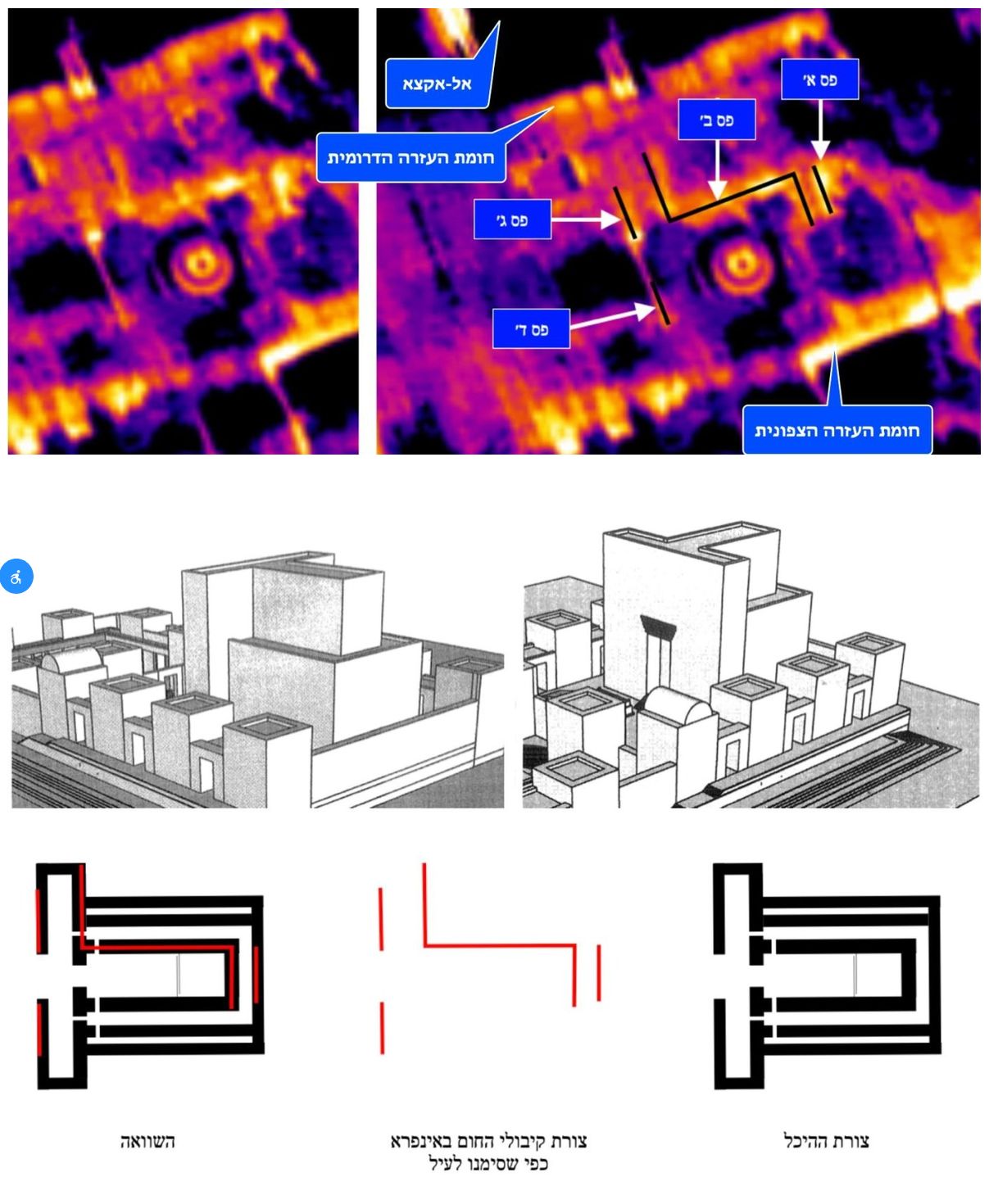
"Two or three years ago, a young man from Monsey who lives now in Eretz Yisroel, Rabbi Barak Shragai, came to me. He had decided to donate a sizable sum for the research of the site of the Mikdosh. He had the entire underground area of the Har Habayis surveyed through aerial infrared photographs which examined the site, determining where there were hollow areas and tunnels. He found that such spaces and tunnels existed under the Dome, indicating that this could not be the location of the Kodesh Kodoshim, while on the southern side towards the Al Aksa Mosque, the bedrock is solid.
"His conclusion is astounding: the Dome of the Rock is not the site of the Evven Hashesiya at all while the site at the southern side of the mountain, in the inner courtyard opposite the Western Wall of today, is so, and where the water channel flows on the other side; those who presume halachic permission do ascend from there. There were additional discoveries like the exposure of the foundations of the Heichal which was wide at the facade and narrower from behind. Everything, including the foundations, are clearly visible on the infrared photographs, rather than on the area which was formerly believed to be the site of the Mikdosh."
Rabbi Shraga put together an 800-page book that includes photographs, including of the infrared mapping, that document the findings.
Infrared Pictures of Har Habayis