The warning siren split the silence of the night. Even before the last echo died down between the houses, echoes of distant blasts could be heard as the rockets were deflected by the defense system. People hurried to the shelters as hearts skipped many a beat, as they did each time.
This was the repeated scene these past weeks in Israel. Nonstop sirens wailing, tense nights, skies colored again and again with the lights of rocket interceptions. The immense battle against Iran, the threat of which had been hovering on the horizon for many years, had been transformed into a palpable, tangible reality worming its way into homes and hearts.
In many settlements throughout the country, people had already become accustomed to the routine of fear. Children discerned the beginning of the warning signals even before the adults, while parents, even while attempting to broadcast calm, were unable to conceal the anxiety in their eyes.
But, precisely in the very midst of this ongoing tension, a quiet phenomenon is taking place, a deep one which is not being reported in the media headlines but is definitely being felt everywhere. Many hearts are beginning to open. Because when reality is shaking people up and when even the major power countries in the world are unable to guarantee safety and security, people are beginning to ask questions.
A settler from the South, father of three, describes this in simple language: "We saw sign of all of the major powers: aircraft carriers, protective systems, unparalleled technology. But in the end, when you hear the sirens in the middle of the night, you begin to believe one thing: only Hashem watches over the Jewish people. Not even big America can protect us."
This feeling is not only of the few. It is being voiced time and again, in conversations between neighbors, at Shabbos tables, at family gatherings: people who never defined themselves as religious or even as traditional, find themselves again asking questions of emunah and of identity.
"It has caused us to think," relates a mother from one of the Northern settlements. "We are not religious people but when the children ask at night if everything will be alright, you realize that you have to supply them with something deeper than faith in the army. You have to give them faith."
More and more parents are honestly admitting that the war has shaken them up, not only from the aspect of a sense of security but also from a spiritual plane.
"You suddenly ask yourself," admits a father from the North. "What we are really supplying our children with? Professionalism? Yes. Education? Yes. But what about self-identity? What about emunah? What about roots?"
And thus, in a period of tension and insecurity, a quiet initiative is growing and swelling. Parents are beginning to talk about Jewish education. Families are discovering an interest in tradition.
And primarily - fathers and mothers are voicing a simple sentence: "Let at least our children grow up with emunah."
One father from the South expressed it even more sharply, "This war has shaken us up. I suddenly understood that we don't have the right to gamble on our child."
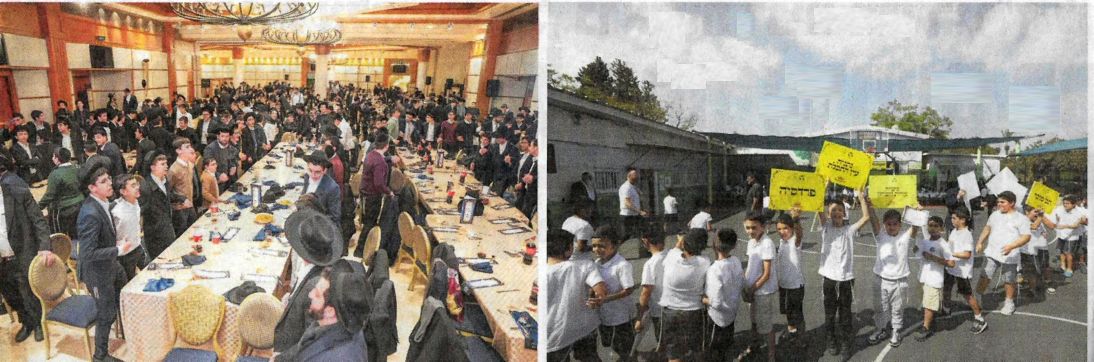
These statements are not rare. In talks with administrators of Torah institutions and with activists in outreach, it becomes apparent that in recent years, especially since the massacre of Simchas Torah, there has been a wave of requests from secular and traditional families who seek to enroll their children in Torah-oriented schools.
A portion of them are not prepared to go all the way in changing their lifestyle, while others are deliberating. But they all share one vital point: they want their children to grow up with Torah, with emunah, and with roots.
"We see this on a daily basis," says a principal of a Torah school in the South. "Parents call up, asking if they can enroll their children. Sometimes, they come right out and admit: 'We are not observant but we do want our child to grow up with Torah values."