This essay was originally published thirty years ago.
Part 1
For Part II of this series click here.
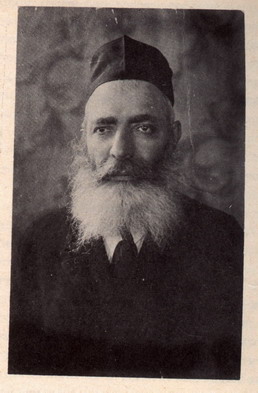
Reb Yeruchom Levovitz, the famed mashgiach of Yeshivas Mir in Europe whose ninetieth yahrtzeit was this year, was a deep and original thinker. One of his themes was that da'as should reign supreme over man. Another of his main themes was that it is essential that one feels obligated to do mitzvos and not just that he does them because he likes to do them.
In these two articles, in honor of Elul and in connection with the yahrtzeit, we will dwell upon some of Reb Yeruchom's insights into man's specific kochos hanefesh. Reb Yeruchom dedicated his life to perfecting himself as well as others and he certainly became an expert in this field. One ability that is specifically given to Klal Yisroel is the koach of tefillah which we will discuss first.
Necessity of Tefillah
Rashi says in Bereishis (2,5) that even though plant life was created on the third day, not a blade of grass appeared above ground until the sixth day. Creation of plant life on the third day meant that grass existed — but only inside the ground. It was only after man was created on the sixth day and he davened to Hashem for plants that plant life actually appeared. Thus, it was necessary for Adam to daven before plants could appear.
Based upon this Rashi (and other proofs), Reb Yeruchom postulates that nothing in teva can be accomplished without tefillah. Even where Hashem, as it were, desires a result, he will wait for us to daven for it.
Thus, even though Hashem promised Avrohom that the Bnei Yisroel would leave Egypt and even though the time had arrived for the exodus, nonetheless, before the redemption could actually take place, we still had to daven. Thus, it says in Shemos (2,24) that Hashem heard their cries, and only then He "remembered" His covenant with Avrohom, Yitzchok, and Yaakov.
Similarly, we find that although Hashem wanted Ovos and the twelve tribes to be born, Hashem still waited for the tefillos of the avos and imahos before giving them the children.
We also find that lack of tefillah caused Hashem to hold back from helping. Rashi explains that when Yaakov fled to Choron he first went all the way to Choron and only then realized that he had passed the mokom hamikdash without davening. It was only when he had arrived in Choron and felt remorse for passing the mokom hamikdash without davening and then started back, that Hashem helped him with kefitzos haderech.
Rashi asks (28,17), "Why when Yaakov passed the mokom hamikdash did Hashem not keep him there?" He replies, "If he did not have his heart set to daven, Hashem should stop him?"
Man's actions determine the course of history, and nothing is accomplished without tefillah.
The fact that every person does get some things, even important things, without tefillah is not a contradiction. These are not man's accomplishments, but merely the setting in which that particular individual's life is to be lived. He gets no reward for these gifts and they are not considered his. If man wants to achieve, to accomplish, to do anything constructive, he must pray.
Reb Yeruchom's talmid, Rav Wolbe, writing in Alei Shur (II, p. 590), quotes the gemora in Niddah 70B that says if one desires chochmah or riches or children he must daven for them, and adds, "If people who learn Torah would know this gemora they would pour out their hearts to Hashem. Who knows how many potential Torah giants were lost because they did not daven properly?"
Earlier (p. 126), he quotes the HaRav Yonoson Eybeshitz who writes, "It is tested and proven that if a person davens Shacharis with concentration then he will be zoche to do mitzvos ... and it goes without saying he will be successful that day in Torah.
"The opposite is true as well. Whenever I do not daven with the proper concentration, I am unable to learn properly either. ... Therefore, do not say that which I have accomplished in Torah is due to my greater intellectual capacity. That is an untruth. There is nothing which enables man to attain clear thoughts and to unlock the treasures of Torah besides davening to Hashem with tears to have mercy on him and grant him Torah knowledge."
Tefillah as the Sole Recourse
In Beshalach (14, 10), Bnei Yisroel are being chased by Pharaoh and his army. They are surrounded and have no escape. At this point they turn to Hashem in tefillah. Rashi's comment on the phrase, "Bnei Yisroel cried out to Hashem," is, "They adopted of their ancestors' craft," meaning that they prayed. Rashi cites verses showing that the Ovos davened to Hashem.
The obvious question is: what is Rashi teaching us that is not obvious from the Torah itself in his comment that Bnei Yisroel adopted their ancestors' craft?
Reb Yeruchom explains that the analogy between the prayer of the children and the Ovos serves to teach us in what spirit we should daven. When the Ovos davened, the situation was not always desperate. In fact, the example of Avrohom's davening is when he davened for Sodom. At that time, Avrohom himself was not at all threatened.
Reb Yeruchom explains that Rashi is teaching us how the ovos davened and how we should daven. The avos davened with the same feeling as the Bnei Yisroel did at that dark moment. Every time a person davens he should feel that his situation is the same as the Bnei Yisroel when they were surrounded by Pharaoh's army. We are totally desperate without Hashem. That is how the ovos davened all the time and that is the kind of prayer which can help us successfully emerge from our tzoros.
Based upon this, Reb Yeruchom explains the gemora in Brochos (6B) that calls tefillah, "Matters which are at the pinnacle of the world." The posuk says in Vo'eschanan (4,39), "You shall know today and be totally convinced that Hashem is the almighty in the heavens above and the earth below. There is nothing else." This is the lesson tefillah is to teach us. We must always daven with the state of mind that we are desperate without Hashem. We have absolutely no chance without Hashem's salvation.
Purpose of Yissurim
The Midrash (Shemos Rabba 21, 5) says that Hashem so wants man to daven with the proper attitude that he will engineer a totally desperate situation. This is what Hashem did at Yam Suf, according to the Midrash. Another example of this is the gemora in Yevamos (64a) that says that the reason Hashem caused the Imahos to be childless is because Hashem wanted the avos and they to daven. Thus the purpose of the tzoros is to bring about proper tefillah.
Reb Yeruchom said on another occasion that we may view tzoros from the wrong perspective. We may feel relieved if we overcome some difficulty, and that it would have been better had the entire episode not occurred. However, Reb Yeruchom argues that Hashem wants the tzoros because of the rich reward we reap as a result. Therefore, we have gained from the problem and the tzoro served a good purpose.
Akshonos Lesheim Shomayim
The posuk in Vayeitzei (30, 8) says that the reason Rochel called Bilhoh's second son Naftoli is because, as Rashi explains, Rochel said, "I was stubborn and beseeched Hashem profusely to be my sister's equal and I succeeded."
Reb Yeruchom says that this is the source of greatness. The difference between the ordinary person and the godol is in their reaction to adversity: "This is precisely where gedolim are produced. They never were daunted by difficulty. Nothing can stand in their way. I firmly believe that it is impossible to achieve greatness, to become like an Avrohom, if one does not stubbornly pursue all his convictions. They (the gedolim) triumphed and achieved all their convictions."
The akshonus of Rochel was based upon her conviction that her sister was on a higher madreigoh in ruchniyus than she. Therefore, she relentlessly worked on perfecting herself until she finally achieved success.
He cites various other examples. Moshe Rabbeinu davened no less than five hundred fifteen tefillos to go into Eretz Yisroel. Moshe wanted to do mitzvos in Eretz Yisroel as the gemora says in Sotah. Therefore, since entering Eretz Yisroel would enhance his ruchniyus, Moshe Rabbeinu stubbornly carried on until told by Hashem himself to stop.
One of Reb Yeruchom's main ideas is that one must enable his da'as to control his activities. Therefore, when it is clear that an action is the rotzon of Hashem, Reb Yeruchom says that one must devote his entire self steadfastly towards pursuing that goal.
This was the secret of the Chofetz Chaim's greatness as well. Before the Chofetz Chaim published the Mishnah Berurah, he underwent a terrible tragedy. An ordinary person would have been broken by such a tragedy but the Chofetz Chaim announced, "Worse things may befall me but he (the Soton) will not affect me in the slightest way."
Similarly, when the Chofetz Chaim was prevented at first from going to Eretz Yisroel, Reb Yeruchom's first thought that the Chofetz Chaim would say it is a sign from the Shomayim that he should change plans. However, the Chofetz Chaim announced to his son-in-law, "He (the Soton) should know that he will not influence me. I am going."
Reb Yeruchom writes that it is not only the stubbornness in the face of adversity which is the key to success but that adversity itself is crucial. We noted previously that Hashem may create a tzoro in order to cause man to daven properly, however, adversity is not only important for proper tefillah, it is necessary for human growth as well.
Chazal (Bereishis Rabba 9) say that when it says that Hashem saw everything in creation was "tov me'od," it refers to the yetzer hora. Reb Yeruchom (1:101) says that everyone can realize from his own personal life that his entire progress is due to the yetzer hora. It is only when we succeed in conquering our yetzer hora in some way that we grow and improve.
This is the meaning of the warning of Shlomo Hamelech in Koheles (12:1), "Remember your Creator in your youth before the bad days arrive and you will find yourself in the days in which you will have no desire." Chazal say that "the days in which you will have no desire" refer to the times of Moshiach. This is amazing because we constantly daven for Moshiach's arrival and here Shlomo Hamelech seems to imply that his arrival is a tragedy.
Reb Yeruchom explains that man only accomplishes when adversity is present, and this is the situation in pre-Moshiach times. It is true that man must tread a difficult path. Nonetheless, this is the only path to success. Without obstacles, man does not have the potential to grow.
Upon being tortured by the Romans at the time of his death, Rabbi Akiva said that he waited a lifetime for that moment. Hashem granted Rabbi Akiva many opportunities for growth in difficult situations. However, this was a situation which Rabbi Akiva never encountered before and thus, a unique opportunity to attain new heights.
Reb Yeruchom quotes the Sefer Hayoshor (6:6): "He shall wait every month, every day and every hour. He should tell himself, if difficult circumstances did not present themselves today, they will come tomorrow and if not tomorrow then the next day. At all times we must be prepared for them. This is the attitude of a tzaddik who is aware that this world is a domicile of travail."
Thus, nisyonos are not bedi'eved situations but rather opportunities for growth. Reb Yeruchom explains that we beseech every day, "Do not bring us tests," only because we are afraid that we may fail, but tests themselves are not to be shunned at all.
If we view adversity as opportunity for growth and welcome difficult situations, then we have a better chance to attain new heights. Our attitude towards nisyonos will greatly influence our success in the tests themselves.
End of Part I