| | Feature
HaRav Zelig Reuven Bengis — A Living Shas
by Yated Ne'eman Staff
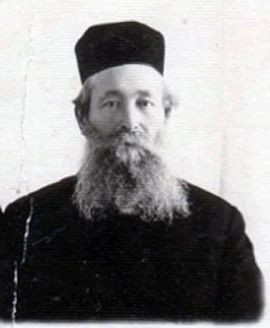
In honor of the seventy-third yahrtzeit of R' Zelig Reuven Bengis (7th of Sivan, 5713 — 21 May 1953). This was first published 33 years ago, in honor of the fortieth yahrtzeit.
There was something about the young visitor which disturbed him. R' Zelig Reuven Bengis, the elderly gaon, who had assumed the position of Ravad of Yerushalayim in 1937 at the age of seventy-five, was accustomed to the steady flow of famous talmidei chachomim and select yeshiva students who loved to ask him their questions, to speak in Torah with him and to draw from his ever-flowing wellsprings of wisdom. The door of his dilapidated house in the Batei Neitin neighborhood of Yerushalayim remained half-open all day, so that callers could enter even without knocking.
Yerushalayim's geonim and brilliant lamdonim knew that in that small abode, they would find the gaon with the beaming countenance, bent over a sefer, studying with the verve and vigor of a youth who was savoring the sweetness of a Talmudic sugya for the first time in his life. They knew, too, that they would be received by the elderly gaon with joy and warmth, as if each caller were an only child, who only occasionally visited his father to speak with him in Torah.
This time, though, an odd scene unfolded. The yeshiva student who had just entered found R' Zelig Reuven engrossed in his studies. As usual, R' Zelig Reuven greeted him pleasantly. Yet something seemed different, nonetheless. At the very onset of the conversation, something about the youth disturbed the gaon. With his keen and brilliant mind, he detected a trace of strangeness in the youth's personality. Perhaps he was struck by the tinge of sternness and the subtle overtones of conceit in the youth's voice.
Years later, the gaon's discerning senses proved accurate, for that very same yeshiva student strayed from the true path and became a professor. He was still a talented and brilliant yeshiva student when he visited R' Zelig Reuven. Yet the gaon's sharp eye had seen something already.
With customary warmth, R' Zelig turned to the young man and said: "I want to test my memory. Please take a sefer off the shelf—it doesn't matter which sefer—and `pin-test' me!"
The pin test is said to have originated in Yeshivas Volozhin. The examiner would open a sefer at random, and place a pin on a certain line, reading it aloud and pushing it through the successive pages. The person being examined, would then try to quote the passages through which the pin had passed on the other pages.
The visitor took the first sefer he found on the overcrowded shelf, opened it and placed a pin on a particular line. The gaon began to quote subsequent pages verbatim. The young man's eyes widened in surprise. He took down another sefer, and the gaon once more began to quote with amazing clarity and precision. Again and again, this scene repeated itself.
The gaon was pin-tested on numerous sifrei rishonim and acharonim on all facets of the Torah, and quoted the texts word for word, before the startled youth who was stunned by the extent of R' Zelig Reuven's brilliance.
At last, R' Zelig Reuven riveted his glimmering eyes on his visitor, and said: "Young man, I wanted to teach you that sometimes, elderly Jews also know a bit."
Jerusalem in 1950 under Jordanian rule

The Child is Right
Even as a child, R' Zelig Reuven was famed for his brilliance and his sharp mind. He was born in Shnipishok, a suburb of Vilna, and as a child was already reputed for his remarkable talents and unrelenting diligence, which did not wane even in his final days. Even before his tenth birthday, the "Illui of Shnipishok" was well known in Vilna—a city replete with chachomim and sofrim.
During that period, Vilna was taken by surprise. The Ridbaz had arrived for a visit, and all the city's gedolim streamed to his lodgings. Among the visitors was the child prodigy, Zelig Reuven, who had also come to glimpse the gaon's face and to savor his Torah insights.
A lively halachic debate developed between the Ridbaz and Vilna's scholars. Some of the eminent visitors expressed their opinions. Others countered them. Suddenly, the young Zelig Reuven spoke up, "But the matter is explicitly explained in Gittin," he said.
A startled silence prevailed. The Ridbaz replied: "I don't recall such a statement."
But Zelig Reuven, who wasn't even ten at the time, stuck to his guns. The Ridbaz mentally reviewed the entire tractate, and then turned to the child and said: "Let us see! Where does that statement appear?"
Zelig Reuven did not lose his composure. He didn't hesitate, nor did he have to hastily leaf through a gemara in order to locate the precise place. Recalling the page by heart, he turned to the talmidei chachomim in the room, and said: "Open to page ploni, and on amud ploni, you will find the explanation in Rashi."
Someone quickly opened to the suggested page. The amazement of all those present, most of whom were talmidei chachomim of great stature, was boundless. The child was right!

A Living Shas
When he was a bit older, he began to study under the Netziv, and was outstanding even amidst the lions of the illustrious Yeshiva of Volozhin. The Netziv, who treated him like a son, and was particularly fond of him, calling him "a living Shas."
What made him so unique? What were his special attributes?
The Netziv explained, "Were he blessed only with his natural, G-d given talents, they would suffice to elevate him to the heights of brilliance. Were he equipped only with diligence, and not with magnificent talents, that trait would suffice to fashion him into a godol hador. However, since he possesses both these attributes, he is destined to be the eye of Torah Jewry in our time."
Brilliance and diligence were the two attributes which accompanied him his entire life, and which transformed him into the rav of all Israel, from whose fountains of wisdom many still drink today.
"The immensity of the greatness and brilliance of the Prince of Torah, the great gaon Maran Zelig Reuven Bengis, Gavad of Yerushalayim, has become well-known the world over. Who can describe the extent of his keen intelligence and amazing mastery of all aspects of Torah, okair horim vetochanan besvara zeh b'zeh...?" wrote the Gavad, R' Yitzchok Weiss.
Today, when every avreich is called HaRav, and every rav —HaRav HaGaon, it is difficult to properly assess the brilliance of one who was so widely acclaimed by the geonim of past generations. He knew all the tractates of Bavli and Yerushalmi, along with the rishonim and acharonim, by heart.
"I am thoroughly versed in more than four hundred sifrei acharonim on the Shas," he once told a frequent visitor to his home. His mastery of all the books of the Tanach, was also amazing. He not only knew them all by heart, but was also familiar with each and every kri uchtiv of the Tanach.
He was only twenty-three when he received smicha and a heter hor'ah. "Yodov rav lo beShas uposkim," testified R' Yitzchok Elchonon Spector of Kovna.
"He is a new container filled with vintage wine, thoroughly versed in the entire Talmud and in all the works of our poskim. He is also sharp-witted... and [blessed] with a keen intelligence and good common sense... I am sure that those who follow him will be fortunate, and that his light will shine upon them in all its radiance," wrote his mentor the Netziv.
Praising him, the gedolim of Vilna wrote: "One of the most eminent and excellent lomdim in Israel... thoroughly versed in Shas and poskim, wise, and blessed with common sense. Very great in Torah and chochmah, and a boki in the entire Torah."
"One of the gedolim of his generation."

A Bad Deal
This brilliance remained fresh even during his old age, and until his final days. At that time, the gaon was very weak and frail—too weak to study, as he had always done, from a printed sefer. As a result, he had to review his studies by heart.
"What will happen," the gaon fearfully said, when he turned ninety, "if, Heaven forbid, I err or am not as precise as I should be?"
He knew no peace, until he had made an agreement with a neighborhood child. He, the famed gaon, who was well-known throughout the entire Torah-world, would review the gemara, along with Rashi and Tosafos, by heart. The child would test him, following in the printed gemara, to see if he hadn't misquoted the text, or cited it inaccurately.
"I will pay you for every mistake you find," R' Zelig Reuven promised.
The child accepted the proposition, but from his point of view, it wasn't profitable at all. For three days, the child spent many hours beside the bed of the gaon. The child's eyes remained glued to the gemara, and R' Zelig Reuven repeated the text by heart. Throughout that entire period, the child found not even one mistake.
Two Days Before His Death
Two days before his death, R' Zelig Reuven turned to a family member, and asked him to conduct a "test" in order to ascertain whether his memory was not betraying him during his illness.
"How can I test rabbenu?" his stunned relative asked.
R' Zelig Reuven, though, had devised an original method. "Please read me the last words of the annotations in Massores HaShas, or in Gilayon HaShas which appear in the margins of the gemara," begged the frail gaon.
His relative agreed, and removed various tractates from the bookshelf. He opened each one of them, and read aloud the final words of the Massores HaShas of each page. The ailing gaon, who died only a few hours later, quoted the entire text of those pages with amazing precision and clarity, citing, too, the exact locations of all the cross references.
Remarkable Hasmodoh
However, as we have said, he had one other quality, which together with his rare talents enabled him to acquire so amazing and total a mastery of all aspects of the Torah. His remarkable hasmodoh was no less amazing than his brilliance, his sharp wit and his unique memory— ceaseless hasmodoh, from early childhood until old age!
Even after marrying and receiving smicha, he rejected the posts offered him by important communities, and refused to accept the mantle of rabbanus. He yearned to pursue Torah—and only Torah— undisturbed. For eight consecutive years, R' Zelig Reuven was supported by his father-in-law, and studied Torah with rare hasmodoh, utilizing every split second to achieve his aim.
In later years, he was compelled to seek a livelihood, and agreed to accept a position as rav of a small town. He feared that presiding in a large community would distract him.
In 5652, he was appointed Rav of the community of Badki near Horodna. Throughout his seventeen year tenure in that small community, he remained deeply engrossed in his Torah studies.
Later on, he accepted a position as Rav of Klovaira. He occupied that post for five tranquil years, devoting himself to the spiritual and economic restitution of the community which had been ravaged by the First World War.
During that period, though, he could no longer hide behind the cloak of his small community. He had become renowned as one of the greatest talmidei chachomim of Lithuania, and at the annual conventions of Lithuania's rabbonim, was seated at the head of the presidential dais. Despite the honor and glory which surrounded him, he always tried to refrain from public involvement, so that he could devote himself to his studies and to guiding his small community.
One Hundred and One Times
In 5696, R' Reuven Zelig accepted the position of Ravad of the Eida HaChareidis of Yerushalayim, which he occupied alongside the Gavad R' Yosef Tzvi Dushinsky. Thus, when he was seventy-five, he fulfilled his lifelong dream, and moved to Yerushalayim.
Despite his advanced age, he plunged into his new task with youthful verve and vigor. In addition to his function as Ravad, he served as Rosh Yeshivas Ohel Moshe, founded by Maharil Diskin. He also performed the special functions of a Ravad, and received never-ending streams of talmidei chachomim who sought to speak with him in learning. All this, though, did not affect his famed hasmodoh, which did not slacken one iota as a result of his age, nor as a result of the stressful demands of his position.
Even then, his hasmodoh was a source of wonder. Every eleven months, he would conduct a siyum on the entire Shas! A few months before his death, he told one of his close acquaintances that he had just finished the Shas for the one hundred and first time!
However, another, quite unusual, siyum caused him exceptional joy. One day, R' Zelig Reuven informed his family of his plans to celebrate another siyum. His family was surprised, because he had always completed the Shas every eleven months, and only five months had passed since the last siyum. Something else puzzled them too. At this siyum R' Zelig Reuven radiated indescribable joy. His eyes shone; his face expressed sublime delight. This wasn't the first siyum he had held, nor the tenth. Why was he so elated?
"This siyum is being celebrated in honor of my completing the Shas in five minutes," he confided to a surprised friend.
"In five minutes?" someone asked.
"Yes!" he replied. "In chutz la'aretz when a rav is invited to a simcha, he knows that it will be held on time, for there, time is time! Here in Yerushalayim, people are a bit less punctual, and at each simcha, I find five minutes here, five minutes there, before attending to my duties as sandek or mesader kiddushin. As a result," he concluded, "I decided to establish a special seder—a five minute one! During those waiting-moments, I completed the entire Shas by heart, and am now celebrating a siyum for the Shas I studied in those moments."
On the seventh of Sivan, 5713, R' Zelig Reuven Bengis returned his pure soul to Heaven. He was ninety years old at the time.
"The day after Kabbolas HaTorah, a sefer Torah was returned to its Maker," said R' Isser Zalman Meltzer in his hesped. He was buried in chelkas harabbonim on Har HaMenuchos.
He was buried, and yet his lips still gently move, for his seven volumes of Liflagot Reuven two of which contain droshos and chidushei aggadah, and five of which contain chidushim in halacha as well as pilpulim and hadranim, are widely read by the populace at large. His Torah is still studied today!
|